
 Zombies are one of my favorite horror story “monsters.” There’s something so haunting about a threat that is basically humanity but slightly… off. Zombies don’t have a motive; there’s no reason why they do the things they do. They simply operate off a basic needs-based system. They’re the very definition of id: they need to feed and they need to feed now. There’s something scary about a foe that looks exactly like us but cannot be reasoned with or stopped. But, all that aside, the most interesting thing about zombies is the way the stories that feature them force us to take a good look at ourselves. A common theme in most zombie stories is how the plague turns humanity into the real monsters. It’s one of my favorite tropes of the genre and something I love to see various storytellers sink their teeth into. Nobody was better at this than George A. Romero. His films pioneered the modern zombie genre by focusing their lenses on the intimate human stories rather than the epic, action-packed survival stories we might see today. Romero seemed most interested in how individual people react to zombies rather than what, specifically, caused them or how they might be defeated. It’s what made his films interesting and it’s what makes his novel, The Living Dead (completed by Daniel Kraus after Romero’s passing), interesting. The novel is more epic in scale than any of Romero’s films but feels no less intimate than the best of his work. It’s a brilliant achievement in the career of a man who had many brilliant achievements and it’s quite possibly one of the best zombie novels I’ve ever read. (4.5 out of 5 wands.)
(Mild spoilers for the novel follow!)
The Living Dead by George A. Romero and Daniel Kraus
Set in the present day, The Living Dead is an entirely new tale, the story of the zombie plague as George A. Romero wanted to tell it. It begins with one body. A pair of medical examiners find themselves battling a dead man who won’t stay dead. It spreads quickly. In a Midwestern trailer park, a Black teenage girl and a Muslim immigrant battle newly-risen friends and family. On a US aircraft carrier, living sailors hide from dead ones while a fanatic makes a new religion out of death. At a cable news station, a surviving anchor keeps broadcasting while his undead colleagues try to devour him. In DC, an autistic federal employee charts the outbreak, preserving data for a future that may never come.Everywhere, people are targeted by both the living and the dead. We think we know how this story ends. We. Are. Wrong.
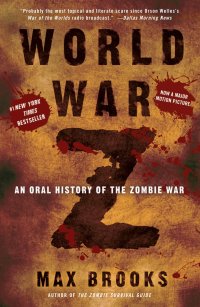 I imagine a lot of people are going to be reading zombie books during this COVID-19 crisis. Just like the Contagion film has seen a spike in popularity, so too, I feel, will many zombie stories. I can’t blame people for turning to fiction during this time of crisis; it can be cathartic to view a disaster movie in a time of disaster. But that’s not why I finally picked up World War Z. World War Z is one of those books I’ve been meaning to read for years. It’s frequently touted as one of the best zombie novels. I read an early screenplay for the film – back when it still tried to adhere to the book’s structure – and loved that, but I just never got around to reading the book. And then I heard that the novel’s author, Max Brooks, was publishing a new novel this year – Devolution – and I thought now was the time to finally give World War Z a read. At the end of the day, I totally see why World War Z is as beloved as it is. It’s a really unique take on the zombie genre, combining it with a traditional oral history of a real-world war is a stroke of genius. But I don’t know that I loved this book. It’s good, but the hype might have killed it for me. (Mild spoilers may follow.)
 To say the first Zombieland film was a pretty solid horror-comedy feels like an understatement, but that’s what it was. At the time of its release, it felt groundbreaking as hell. Sure, it wasn’t the first comedic horror film (or even the first comedic zombie film), but it was one of the first films of its ilk to be as scary as it was funny. Audiences hadn’t really seen such a well-executed horror/meta-comedy since the days of the first Scream film and it hit pop culture with a splash before fading into obscurity. A sequel has long been requested, with the writers and director all saying they were working on one but didn’t want to make it until they felt they’d cracked the story. Well, it’s a full ten years after the release of the first film, and I guess they’ve cracked the story as Zombieland: Double Tap releases in theaters today. The two questions on everyone’s mind are: “is it good?” and “how does it compare to the first film?” Unfortunately, the answers to those questions aren’t too positive. (This review will be as spoiler-free as possible, but any elements that have been shown in trailers may be discussed.)
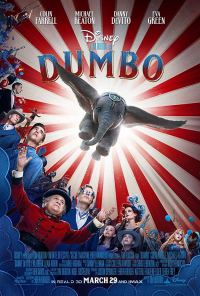 Disney just keeps remaking their animated movies, huh? It all could be traced back to 2010’s Alice in Wonderland – fittingly directed by Tim Burton, the same director helming this latest live-action remake. From there, Disney just kept on going down the proverbial rabbit hole with remakes. Their latest trip down said rabbit hole – one of no less than three live-action remakes due to be released theatrically this year (with a fourth expected to premiere on the Disney + streaming service by the end of the year), Dumbo is a live-action remake of the classic 1941 Disney cartoon of the same name. This time, helmed by director Tim Burton and screenwriter Ehren Kruger, Dumbo expands that fairly short animated film into a nearly two-hour long Tim Burton extravaganza. The problem is: nobody was really asking for a Dumbo remake. So, is it actually any good, or is it just another mediocre film from Disney, a company that seems to specialize in releasing mediocre films all throughout their various film studios? Answer: it’s the latter.
 Thoroughly Modern Reviewer