
 I love Night Vale. A lot. It’s one of those ideas that is eternally malleable. There’s so much that can be done with these characters and the setting and novels are a really good way for the authors to push the boundaries of the world. It’s what they did with the first two novels, Welcome to Night Vale and It Devours! and it’s obviously what they’re seeking to do here with their third, The Faceless Old Woman Who Secretly Lives in Your Home. The Faceless Old Woman is the perfect character for a book devoted to her, much like the Man in the Tan Jacket was a perfect character to explore in the first novel, and the promise of finally learning her story was one that immensely interested me and got me really pumped to give this book a read. Having read it, I can safely say that it does not disappoint. For long time fans of the podcast and previous books, this one might take some getting used to, but the story it tells does complete justice to the character while still spinning a story that’s full of surprise and pathos. (Mild spoilers may follow.)
The Faceless Old Woman Who Secretly Lives In Your Home by Joseph Fink and Jeffrey Cranor
In the town of Night Vale, there’s a faceless old woman who secretly lives in everyone’s home, but no one knows how she got there or where she came from…until now. Told in a series of eerie flashbacks, the story of The Faceless Old Woman goes back centuries to reveal an initially blissful and then tragic childhood on a Mediterranean Estate in the early nineteenth century, her rise in the criminal underworld of Europe, a nautical adventure with a mysterious organization of smugglers, her plot for revenge on the ones who betrayed her, and ultimately her death and its aftermath, as her spirit travels the world for decades until settling in modern-day Night Vale.Interspersed throughout is a present-day story in Night Vale, as The Faceless Old Woman guides, haunts, and sabotages a man named Craig. In the end, her current day dealings with Craig and her swashbuckling history in nineteenth century Europe will come together in the most unexpected and horrifying way.
Part The Haunting of Hill House, part The Count of Monte Cristo, and 100% about a faceless old woman who secretly lives in your home.
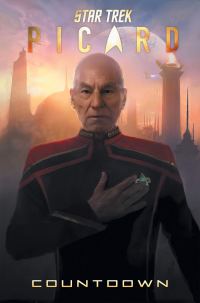 I’ve never read a piece of Star Trek fiction before. Well, unless you count that weird crossover comic with Doctor Who from 2012/2013. In fact, my only real exposure to Star Trek, in general, comes from a handful of episodes of The Next Generation, the first two JJ Abrams movies, and general cultural osmosis. But when the trailers for Star Trek: Picard started dropping, I found my interest piqued. It looked like the kind of show I’d be interested in, so I made a point of watching it. At this point, several episodes have aired and I’m really enjoying the show, so I went and looked to see if anything had been released to tie into the show. And lo, and behold, there was this three-issue prequel comic from IDW, written by Kirsten Beyer and Mike Johnson and illustrated by Angel Hernandez, that promised to reveal some of the events that happened prior to the start of the show. It sounded like the kind of thing I’d be interested in, so I picked up the issues and gave them a read and, I gotta say, it’s really solid. Though a bit short, Star Trek: Picard – Countdown tells a really good story that shines a bit of light on Picard’s history before the beginning of Star Trek: Picard. (Mild spoilers may follow.)
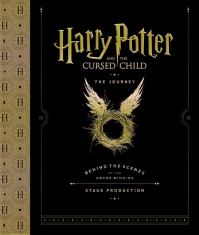 I am one of the (seemingly) few people who really liked the script for Harry Potter and the Cursed Child. It wasn’t perfect by any means, but I felt it had a lot of really interesting ideas and it explored some themes that I thought were worthwhile to explore in a Harry Potter story. But more than that, it seemed like the kind of story that could only work on stage; the kind of production that would have taken countless amounts of people and manhours to pull off. As someone who is literally in university studying theatre, the making of a play as huge as this one was always going to be of interest to me, especially as there’s little chance I’ll be able to make it to Broadway anytime soon to actually see this show staged. So, when Scholastic decided to publish this book all about how the play was created and initially staged, I jumped at the chance to read it. It’s exactly up my wheelhouse, and I have to say that the book does prove to be a really interesting and informative look at the making of this show – even if I do wish it went into a bit more depth.
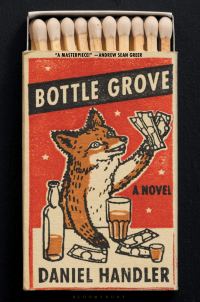 I have never read a Daniel Handler book. This is half-true. I grew up reading and loving A Series of Unfortunate Events, written by Handler under the pseudonym of Lemony Snicket. But I have never read one of Handler’s novels written for adults, under his own name. With that in mind, I really didn’t know what to expect when approaching Bottle Grove, his most recent novel. The synopsis promised something along the lines of magical realism, and I was definitely intrigued to see how Handler approached writing for adults versus writing for children – would he still have lots of fun wordplay and interesting prose? Unfortunately, I didn’t love Bottle Grove. I don’t know that I’d say it’s a bad book or anything, but it definitely wasn’t what I expect and I’m not sure it’s what I wanted, either. (Mild spoilers for the novel follow.)
 I haven’t read a single Star Wars novel since 2016’s Bloodlines (which was genuinely one of the best Star Wars stories, in general, and should be read by all Star Wars fans). It’s not that I don’t have any interest in them, although I did find it a little frustrating that so many of them were being published in the eras of the Prequel Trilogy and the Original Trilogy instead of during the era I was more interested in reading about – the Sequel Trilogy. It’s just that I didn’t really have the time to read these books that might get invalidated in a few years by another canon overhaul alongside all the other books I wanted to read. So, many Star Wars books fell by the wayside. But when I heard about Dooku: Jedi Lost, I was immediately interested. I love audio dramas and I have really enjoyed Cavan Scott’s work on various Doctor Who titles, so I was definitely intrigued. Unfortunately, having read the script and listened to the audio drama, Dooku: Jedi Lost feels more like a lost opportunity than a truly good audio drama. It’s got a good plot but the story doesn’t work well in this medium. (Spoilers follow!)
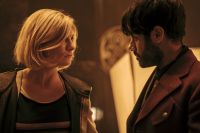 Finales are hard to pull off. Especially ones that have as much ground to cover as this one did. Where we last left off, the Doctor (Jodie Whittaker), Ryan (Tosin Cole), and Ethan (one of the human survivors of the CyberWar, played by Matt Carver) were standing in front of the Boundary, a mysterious gateway between worlds/galaxies guarded by Ko Sharmus (Ian McElhinney), face-to-face with the Master (Sacha Dhawan) who is ready to explain what terrible secret he learned about the Time Lords caused him to destroy the planet. Meanwhile, Graham (Bradley Walsh), Yaz (Mandip Gill), Ravio (Julie Graham), and Yedlarmi (Alex Austin) were trapped on the CyberShip with Ashad/The Lone Cyberman (Patrick O’Kane) and the rest of his Cybermen Army, headed directly toward Ko Sharmus’s planet. With that in mind, The Timeless Children had a lot to tie up: it needed to reveal the secret behind the Timeless Child; it needed to reveal what Ashad’s plan was and how he would be defeated; it needed to reveal who Brendan (Evan McCabe), the mysterious man shown throughout last week’s episode, fit into everything and how the Ruth Doctor (Jo Martin) fit in with the established history of the Doctor; and, most of all, it had to be a good episode. Did The Timeless Child succeed at all of this? Yes and no. It featured a lot of answers that opened the doors to even more mysteries. It uprooted everything we thought we knew about the show before somewhat-disappointingly reverting to the usual status quo. It’s solid, but its ideas need more exploration to really land. (Full spoilers ahead!)
 Thoroughly Modern Reviewer