
Photo credit: Claire Marie Vogel
It is 2013, and My Chemical Romance announces their breakup following an underperforming album, an exhausting tour, and the band’s disillusionment with recording their now-scrapped fifth album.
It is 2019, and My Chemical Romance reunites and announces a brand-new tour, their first in over seven years.
It is 2022, and My Chemical Romance releases “The Foundations of Decay,” their first new single in eight years and sets out on their much-delayed reunion tour.
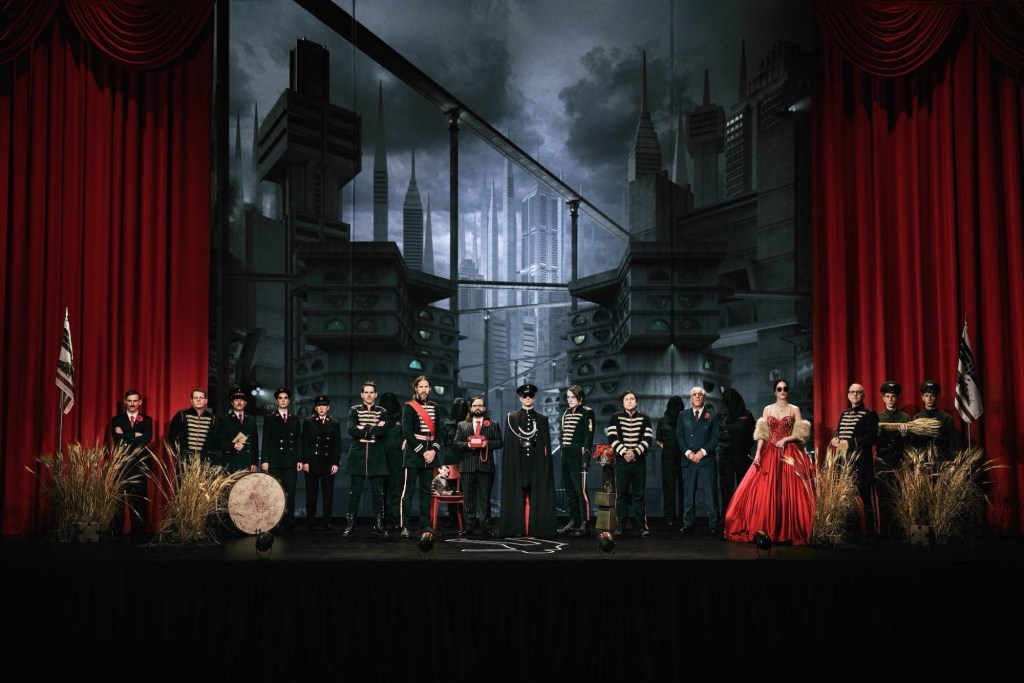
It is 2025, and My Chemical Romance introduces their fans to the fictional country of Draag, an authoritarian regime who forces their military band, The Black Parade, to tour the world, spreading news of Draag’s might while performing the entirety of My Chemical Romance’s most successful album, “The Black Parade.”
It is October 2026, and the Black Parade dies once again, this time at the Hollywood Bowl where a group of masked figures lead the band and their crew into a bright white light.
The Black Parade is Dead… Long Live the Black Parade… and Death to All Who Oppose.
For the past two years, My Chemical Romance have toured the country performing the entirety of “The Black Parade” in celebration of the album’s twentieth anniversary. In “Long Live the Black Parade,” the band crafted an all new layer to the story of the album. What was once a morality play of sorts featuring a cancer patient reflecting on the regrets of his life as he faces his impending death has turned into a story of resistance against government oppression and the fight to free yourself from the shackles of your past.
Within the world of Draag, “Long Live the Black Parade” follows the newly resurrected and reconditioned Black Parade as they are forced to perform across the globe, all to honor their most beloved Grand Immortal Dictator. But every night, Draag horrifically mistreats the band. Secretaries and Clerks assault the members, force them to demean themselves, and ultimately subject them to death at the hands of a suicidal clown. It’s a never-ending cycle of theatre and death—but to what end?
Well, as the tour’s final shows at the Hollywood Bowl revealed, it was all a ploy to aid Draag in the conquering of America. The Black Parade traverse the country, performing their silly little show and showing off Draag’s ever personable Grand Immortal Dictator, thus familiarizing the American public with Draag’s authoritarian ruler and priming us to accept his hostile takeover. Which, as Gerard mentions during the Hollywood Bowl shows, we readily did.
And now, with America under the control of Draag and its rulers, what need is there for the Black Parade? Try as they may to overthrow Draag, assassinate the Grand Immortal Dictator, and even steal back America through the threat of nuclear war, it’s ultimately just as feeble as all the rest of the Black Parade’s previous attempts to break free of their conditioning have been. No matter how many times the Black Parade tries to escape, there’s always a greater power that stops them, that begins the cycle once more. And so, the Black Parade keeps marching, spreading the good news evermore.
Except, that’s not quite what happened at the final performance of “Long Live the Black Parade/Death to All Who Oppose” on October 24th. While the Black Parade has died one way or another at every single show on the tour, there’s always been the implication of them returning. They die and then they begin again. But here, as the Clerk pulls the plug on the band’s nuclear missile and watches all his friends succumb to death, something new happens.
Throughout the tour, Gerard Way has shared tales of a friend of his: the Gentleman. Represented on stage by an old ventriloquist dummy, the Gentleman was a friend of the band’s during their time in Draag’s reconditioning prison, the MOAT. There, he taught them songs and listened to stories of the Black Parade’s past—a series of fractured memories of a fire that sent the band running into the desert, ultimately resulting in them getting hopelessly lost and turning on each other before eventually being captured and imprisoned by Draag. It is in the MOAT that the Gentleman promises to ensure the Black Parade’s story is told.
And now, as the band lays dying on stage at the Hollywood Bowl, a group of figures, all wearing masks inspired by the Gentleman’s appearance, seemingly resurrect the Black Parade and all of their crew and lead them offstage toward a blinding white light of a new life—whether that’s an afterlife or a new lease on life is left open to interpretation.
Nonetheless, within the narrative of the tour, the Black Parade is finally free. They can move on from Draag’s oppressive regime. Their battle is over. It’s a sad ending for the Long Live saga—an ending that, itself, might not even be final as there remains one final leg of the tour, a delayed run of shows in Southeast Asia that may yet add new wrinkles to the story of Draag and the Black Parade. But for now, as the title promises, there is Death to All Who Oppose Draag.
The Black Parade is Dead, Long Live the Black Parade.
An Exercise in Exorcism
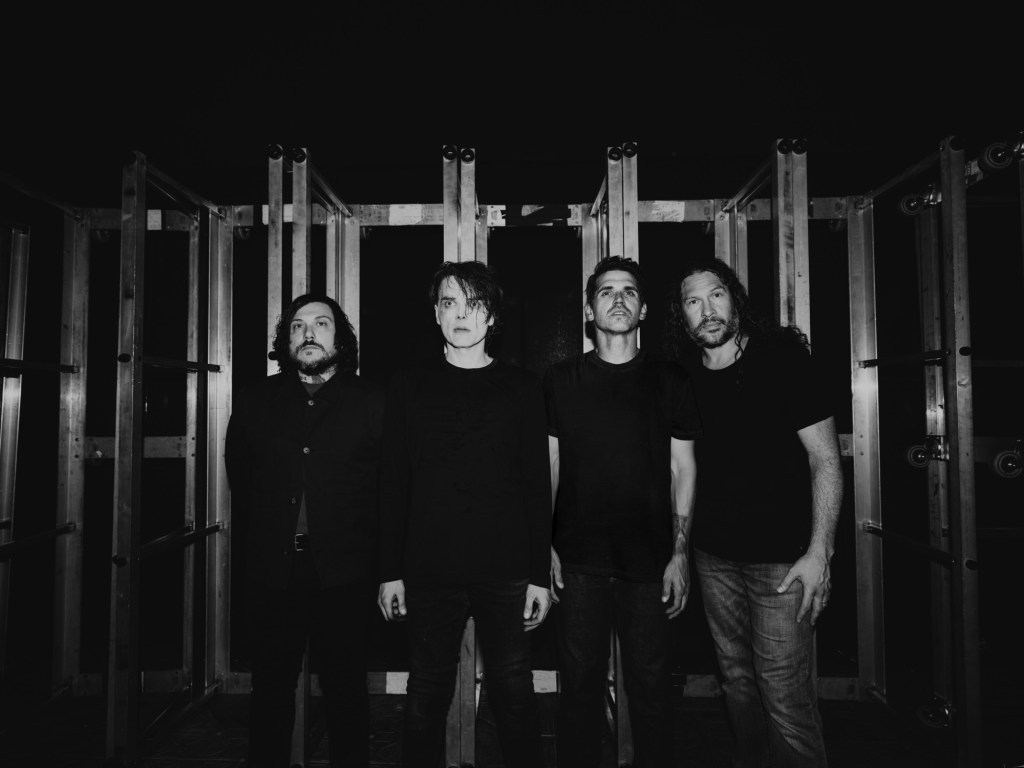
The same, however, is true for My Chemical Romance. By killing the Black Parade, the band itself can finally move on.
At the time of its release, “The Black Parade” marked the most successful period of My Chemical Romance’s career. It was both a critical and commercial hit, spawning an immensely successful multi-year tour and a much-beloved concert film, “The Black Parade is Dead!” To this day, it still remains the band’s most successful album; a shadow that looms large over the band.
Coming out of the original “Black Parade” tour, My Chemical Romance found it challenging to craft a follow-up album. They entered the studio and recorded an entire album that they ultimately felt unhappy with, scrapping it entirely and later releasing portions of it as a series of singles called “Conventional Weapons”. They returned to the studio, creating what would ultimately become their fourth album, “Danger Days: The True Lives of the Fabulous Killjoys”.
“Danger Days” released to much anticipation in the fall of 2010, but it marked a stark departure from the band’s previously dark, almost gothic aesthetic. Gone was the melodrama, in were the bright colors and cyberpunk visuals. “Danger Days” told a more hopeful story: a tale of resistance in the face of oppression. Art was the weapon, and nothing was more powerful than seeking color in a gray, depressing world. The songs were brighter, more upbeat, even dance-worthy. And the reaction was decidedly mixed.
While “Danger Days” has seen a far more favorable reevaluation by the band’s fan base in recent years, it did not originally release to fanfare and cheer. Many were disappointed by the band’s perceived departure from their previous sound and tone, and the album ultimately proved more of a disappointment than a smashing success. But, after all, how can you possibly follow up a success as massive as “The Black Parade?” It was a question that plagued the band during the creation of “Danger Days,” and it was a question that continued to haunt them after its release.
Following the end of the “Danger Days” tour, the band returned to the studio to begin work on a fifth album. Feeling as though their experiment with “Danger Days” failed and that they needed to return to the darker, theatrical sound of “The Black Parade,” “The Paper Kingdom” was born. Said to be a concept album about a support group for the parents of missing/dead children, “The Paper Kingdom” promised a return to the dark, gothic theatrics that catapulted My Chemical Romance into superstardom.
And yet, the band weren’t happy. The joy wasn’t there. This wasn’t really a story they wanted to tell, at least not at the time. The whole experience was joyless and listless. And so, after a twelve-year run, My Chemical Romance broke up.
To escape the shadow of “The Black Parade,” My Chemical Romance needed to die.
Yet even in death, the specter of “The Black Parade” remained. Though the band had gone their separate ways and went on to produce a myriad of solo projects running the gamut from music to comics to TV shows, “The Black Parade” never really left the pubic conscious.
In 2016, three years after the end of My Chemical Romance, the band’s social media posted a series of cryptic teases. Rumors sparked across the fanbase, hopes of a reunion or a new album or a new tour flourished. In the end, it was just “The Black Parade” knocking on the door one more, this time in the guise of a tenth anniversary rerelease, accompanied by a collection of demos from the album’s recording. A boon for fans missing the band, sure, but a massive dash to their hopes of a full-scale reunion.
Three years later, on Halloween 2019, My Chemical Romance announced a “Return” concert to be played later that year. The concert was a massive success, instantly selling out and bringing fans their first glimpse at the reunited band in over seven years. Yet, as the concert went on, the absence of a certain song loomed large. “Welcome to the Black Parade,” the lead single for “The Black Parade” and a staple of My Chemical Romance concerts ever since, wasn’t played during the main set. It wasn’t played during the first encore. It was only right at the end of the show that the band finally returned to “The Black Parade.” And the crowd went wild.
The following month, in January 2020, the band released a short film entitled “A Summoning…” featuring a young man traveling through the worlds of My Chemical Romance’s albums, trying to summon the band. It was a visual delight, a return to the dark, gothic theatrics of “Three Cheers for Sweet Revenge” and “The Black Parade,” and a hint at a possible witchy, fantasy-fueled aesthetic for the band’s future. The film ended with the announcement of a nationwide reunion tour, followed by a later announcement of multiple international dates.
That tour, unfortunately, would be delayed two years due to the COVID-19 pandemic. During those years, My Chemical Romance mostly stayed quiet, occasionally offering updates on rescheduled concert dates but otherwise seldom interacting with their fanbase.
The radio silence continued until May 12, 2022, mere days before the beginning of their much-delayed reunion tour. Completely unannounced and with little fanfare, My Chemical Romance released their first new song in eight years, “The Foundations of Decay.” It was a dark, operatic, track, one that felt like it might have had a home on the unreleased “Paper Kingdom” album. The song was well-received by the fanbase, and immediately became a new favorite.
The band embarked on their reunion tour, subsequently touring the world for the bulk of 2022 and the beginning of 2023 while playing a selection of their greatest his. In the meantime, the band’s longtime friend and producer, Doug McKean suddenly passed away, halting the band’s plans to continue making new music after the release of “Foundations of Decay.”
Following the end of their reunion tour, the band once again disappeared from the limelight. For the next year and a half, fans were left in the dark as to what, if anything, the band had planned next.
In the fall of 2024, the band headlined the When We Were Young festival and played the entirety of “The Black Parade” live for the first time since 2007. Weeks later, they announced the “Long Live the Black Parade” tour, and they’ve been touring the “Black Parade” ever since.
And here we are, the final American date of the “Long Live” tour in the mirror, and it feels as though the band’s itching to move on and dive headfirst into something new. They’ve been more active amongst their fans, they’ve been more vulnerable at shows—with Gerard Way recently explaining how difficult it’s been to make new music in the wake of McKean’s passing. And yet, the band radiates a new yearning for life, a palpable spark of electric creativity.
When the “Long Live the Black Parade Tour” was first announced, fans criticized it as yet another apparent nostalgia grab. And while on some level, it may have been that, the band has added so many new layers to the album’s original story that it feels like an entirely new beast altogether. In many ways, “Long Live the Black Parade” is an entirely new era for My Chemical Romance, akin to the way a new album marks a new era, despite being a tour supporting a twenty year old album.
This tour is creation as exorcism. For twenty years, the specter of “The Black Parade” has haunted the band. It’s influenced their artistic and creative decisions, and it’s proven to be a shadow they’ve yet to escape. And yet, “Long Live…” feels nothing like the original “Black Parade” cycle. The songs may be familiar, but everything else is new. It’s filled with new settings, new characters, and a new story. In many ways, it’s as though the familiar songs acted as a Trojan horse for the introduction of a new era. And fans have responded with immense enthusiasm to this new era.
It’s as though the band had to become the Black Parade once more so they could finally kill them once and for all and find freedom in the very act of creation. The audience may have initially come for the Black Parade, but the need for that nostalgia has passed as the audience is primed and ready for the next evolution of the band. The fans are ready for the band’s next creation.
And now, with the Black Parade once again dead, My Chemical Romance stares the future dead in the face. With the band seemingly open and ready to making new music, a bright future awaits My Chemical Romance. The shackles of their past are gone, and a bright new dawn awaits. Like their fictional counterparts, My Chemical Romance can move out of the shadow of “The Black Parade” and into a new dawn.
The Black Parade is dead, long live My Chemical Romance.



Leave a Reply