

What if random objects all around the world started sprouting human bones? What if, in their investigation, officials learn that the afterlife has an overpopulation problem? These are the questions at the center of Daniel Kraus and Maan House’s The Cemetarians. It’s a very X-Files sort of premise – two people of opposing beliefs team up to solve a supernatural mystery. Unfortunately, The Cemetarians lacks any of the character development or narrative intrigue of its chief inspiration.
To be fair, it’s not entirely Kraus and House’s fault that The Cemetarians feels a bit lacking. The graphic novel’s biggest problem is that it feels way too short for the story it’s trying to tell. A mere four issues, 120-ish pages in total. That’s nowhere near enough time to explore a story as earth-shattering as this one nor is it enough time to give its chief characters enough characterization for their respective arcs to have any weight to them. Instead, The Cemetarians is a case of one thing happening after another constantly, leaving no room for any pauses, breaks, or character exploration.
That’s not to say it’s a bad read or anything; it’s not. For what it is, it’s fun enough. It’s quick-paced and Kraus throws enough ideas at the wall that there’s never a dull moment. Plus, House’s artwork is deliciously atmospheric, dripping with gothic body horror and really leaning into the sheer unholiness of the book’s premise. It’s just one of those books that’s all skin and bones; a story that works sheerly due to its premise’s audacity rather than its execution.
3 out of 5 wands.
The Cemetarians is available now from Vault Comics.
Disclaimer: A review copy was provided by the publisher and Edelweiss. All thoughts are my own.

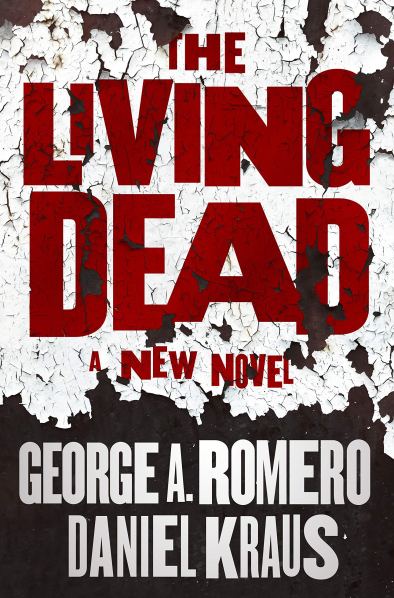 Zombies are one of my favorite horror story “monsters.” There’s something so haunting about a threat that is basically humanity but slightly… off. Zombies don’t have a motive; there’s no reason why they do the things they do. They simply operate off a basic needs-based system. They’re the very definition of id: they need to feed and they need to feed now. There’s something scary about a foe that looks exactly like us but cannot be reasoned with or stopped. But, all that aside, the most interesting thing about zombies is the way the stories that feature them force us to take a good look at ourselves. A common theme in most zombie stories is how the plague turns humanity into the real monsters. It’s one of my favorite tropes of the genre and something I love to see various storytellers sink their teeth into. Nobody was better at this than George A. Romero. His films pioneered the modern zombie genre by focusing their lenses on the intimate human stories rather than the epic, action-packed survival stories we might see today. Romero seemed most interested in how individual people react to zombies rather than what, specifically, caused them or how they might be defeated. It’s what made his films interesting and it’s what makes his novel, The Living Dead (completed by Daniel Kraus after Romero’s passing), interesting. The novel is more epic in scale than any of Romero’s films but feels no less intimate than the best of his work. It’s a brilliant achievement in the career of a man who had many brilliant achievements and it’s quite possibly one of the best zombie novels I’ve ever read. (4.5 out of 5 wands.)
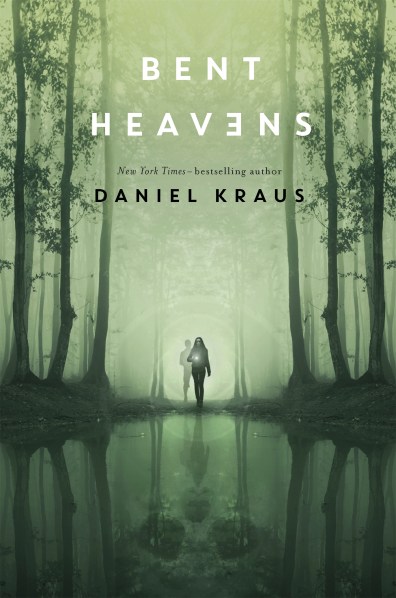 I don’t normally review YA novels for the sheer fact that they so rarely appeal to me. I’m not a huge fan of a lot of the typical fare they cover (teenage drama, lots of romance, etc) so I tend to stay away from them. But I’ve read some of Daniel Kraus’ previous work, the most recent being his adaptation of The Shape of Water, and really enjoyed it. So, when I saw that he had a new book coming out and read the book’s synopsis, I was definitely intrigued. It sounded like the kind of thing that might be right up my alley (being an avid lover of Science Fiction and Horror), so it seemed like a fun book to look into. Having now finished it, I can say that it was a good decision on my part. It’s a really well-written story that does its damndest to defy the normal constraints of its genre. I really enjoyed it and I think it’ll be a good read for a number of different audiences – including, but not limited to, the YA crowd. (Mild spoilers may follow.)
 Thoroughly Modern Reviewer