

Making an audio adaptation of The Sandman seems like a great idea. There’s a lot of ways to convey fantasy settings using just sound and it feels like the perfect medium for The Sandman. I mean, it’s a series about the power of stories and what better way to experience the story than to close your eyes and let the sounds wash over you, right? And, in all honesty, that’s basically what Audible’s adaptation of The Sandman is – though, I’d argue it skews a bit closer to an audiobook than a true audio drama, but for most people, that’ll be just fine. For me, I enjoyed the adaptation but I wish it embraced the power of audio dramas a bit more than it does and relied less on narration to explain the “missing” visuals. (4 out of 5 wands.)
(NOTE: Mild spoilers may follow.)
Continue readingThe Sandman (written by Neil Gaiman, adapted by Dirk Maggs)
When The Sandman, also known as Lord Morpheus—the immortal king of dreams, stories and the imagination—is pulled from his realm and imprisoned on Earth by a nefarious cult, he languishes for decades before finally escaping. Once free, he must retrieve the three “tools” that will restore his power and help him to rebuild his dominion, which has deteriorated in his absence. As the multi-threaded story unspools, The Sandman descends into Hell to confront Lucifer (Michael Sheen), chases rogue nightmares who have escaped his realm, and crosses paths with an array of characters from DC comic books, ancient myths, and real-world history, including: Inmates of Gotham City’s Arkham Asylum, Doctor Destiny, the muse Calliope, the three Fates, William Shakespeare (Arthur Darvill), and many more.
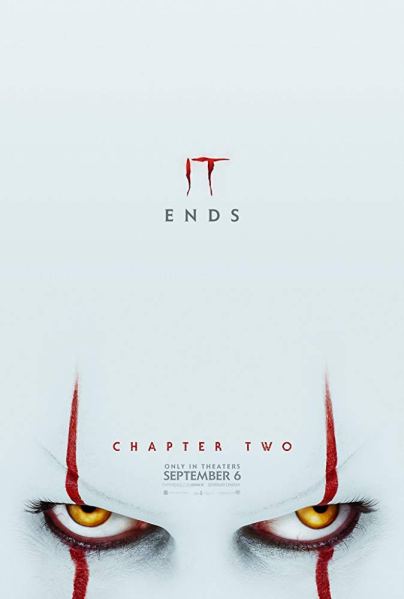 It is a really tricky beast to adapt. It’s a massive novel that constantly jumps between time periods in such a way that to adapt it exactly as written would prove impossible for any kind of Hollywood film as it would require such an extensive runtime – or such an outrageous amount of cuts to the source material – that it just wouldn’t work. So, on the surface, it might seem like a really good idea to separate the two timelines in the novel into two movies – the first exploring the Losers Club’s childhood battle with Pennywise (Bill Skarsgård) while the second movie deals with their second battle with him, as adults. The 1990 miniseries mostly took this approach – though certain elements of the adult storyline were mixed with that of the children storyline, the two were mostly kept separate. The 2017 remake of It took it a step farther by presenting audiences with a film that focused entirely on the younger incarnation of these characters. With the wild success of that first movie, its inevitable sequel, It Chapter Two, was left to adapt the adult storyline and wrap the whole story up. Does it accomplish this and is it as good as the first film was? Yes and no. This movie isn’t a great horror film, nor is it a particularly good sequel – but it is a solid and deeply enjoyable movie. (Mild spoilers for It Chapter Two and all other versions of the story follow.)
  Thoroughly Modern Reviewer