
 Stephen King adaptations are notoriously hit or miss. For every decent one (the It miniseries from the ’90s or the It movie from 2017), there are at least two bad ones (nearly every other Stephen King miniseries, The Dark Tower, and the Carrie remake from a few years ago). It seems that what often works for King in his prose work doesn’t work very well in visual mediums. And that, unfortunately, is the case for this remake of Pet Sematary. Based on his original novel, and the 1989 film of the same name, Pet Sematary is a perfect example of all the reasons a lot of Stephen King stories don’t work in film. The first half of the movie is dreadfully boring, filled with characters who go undeveloped and are uninteresting, leading to a climax that, while often scary, isn’t particularly dramatically satisfying because the film has never made you care for the characters. King’s novels do a better job at establishing the characters and making them likable as he threads the spookier elements into the story. This film tries to do that but ultimately fails. (Spoilers ahead!)
Pet Sematary (written by Jeff Buhler and Matt Greenberg; directed by Kevin Kölsch and Dennis Widmyer)
Based on the seminal horror novel by Stephen King, Pet Sematary follows Dr. Louis Creed (Jason Clarke), who, after relocating with his wife Rachel (Amy Seimetz) and their two young children from Boston to rural Maine, discovers a mysterious burial ground hidden deep in the woods near the family’s new home. When tragedy strikes, Louis turns to his unusual neighbor, Jud Crandall (John Lithgow), setting off a perilous chain reaction that unleashes an unfathomable evil with horrific consequences.

 Who would have thought that Shazam, of all movies, would end up being not only one of the best DCEU movies in years but one of the best superhero origin films in quite some time? Perhaps it’s down to my lack of familiarity with the character and, subsequently, my lack of any real expectations for the film, but I was pleasantly surprised by Shazam. It’s not particularly unique, or anything, but it is the most fun I’ve had with a superhero movie since Thor: Ragnarok, and that’s worth celebrating. Combining lots of humor, great visuals, solid acting, and genuine pathos, Shazam is a superhero movie that will bring out your inner kid as you watch it. It’s a whole lot of fun. (Mild spoilers for the film follow.)
 I have had a lot of mixed feelings about the movies in the Marvel Cinematic Universe. None of them are bad or anything, but I don’t feel like most of them are particularly great. With a few exceptions, most Marvel movies seem to live in this realm of utter mediocrity. They follow the same formula each and every time, with frequently underdeveloped villains, weak third-acts, and humor that tends to undercut the more serious moments. Recent Marvel films have continued to find themselves unable to buck this trend – even some films, like Black Panther, that have managed to have well-developed villains, still can’t quite get the other elements right. So, my expectations for Captain Marvel were pretty low. After all, it’s a film that takes place prior to all of the events in the MCU, existing only to introduce a hero who will, presumably, be important in Avengers: Endgame, but with a plot that takes place so far in the past that it can’t possibly connect to the overarching MCU storyline in any meaningful way. To be honest, the part of the film I was most looking forward to was the opportunity to see Samuel L. Jackson’s Nick Fury in a role that was larger than a glorified cameo. I wasn’t particularly interested in or excited by anything else about the movie. So, with all of that baggage, how is Captain Marvel? Well, it’s another bog-standard Marvel film that has some really nice moments, but ultimately falls victim to many of the problems most Marvel movies exhibit. (There will be spoilers for Captain Marvel in this review.)
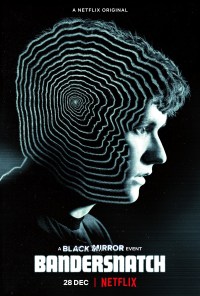 Choose-Your-Own-Adventures books are always a lot of fun. You’re able to explore multiple different endings to a story, some ridiculous, some serious, and you’re able to replay that story countless times to explore each different branch of the story. It’s a method of storytelling that’s never really been tried in film or TV before. Before Bandersnatch, that is. Bandersnatch is the first film in the Black Mirror series. Written by Charlie Brooker and directed by David Slade, Bandersnatch is a Choose-Your-Own-Adventure film that allows audiences to choose how the story of Stefan Butler (Fionn Whitehead) plays out. It’s a whole lot of fun and genuinely impressive to watch (and participate in). (NOTE: There will be spoilers for Bandersnatch. I will try to keep them minor, but it’s hard to talk about this film without spoiling some things.)
 Mary Poppins is one of Disney’s best live-action musicals. It jump-started the film career of Julie Andrews and provided audiences with some of the best known Disney songs. With that in mind, how does one make a sequel to such a classic, beloved film? According to Rob Marshall (director of Mary Poppins Returns) and David Magee (writer of Mary Poppins Returns), the best way to make a sequel is to essentially remake the original film, using a similar (but less interesting) plot and far less memorable songs.
 I’m not afraid to admit that Aquaman was one of my least anticipated films of 2018. It’s a movie about a character I’ve never been interested who was also deeply uninteresting in his previous big-screen appearance in last year’s Justice League. None of the trailers released for the film ever looked particularly good. The visuals were incredible, but the acting from Jason Mamoa (Aquaman) and Amber Heard (Mera) was wooden and boring to watch. So, to say I wasn’t excited about the film would be an understatement, but I love DC and I want the DC movies to succeed and to be good, so, I still saw the movie. And, to be honest, my initial impression was correct. For as innovative as the visuals were, the storytelling and acting were not. (Mild spoilers may follow)
 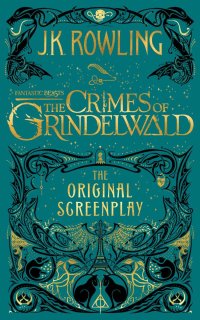 When I first saw Fantastic Beasts: The Crimes of Grindelwald last week, I had some mixed feelings about it. The film had too many characters it was trying to follow and the whole thing felt like more of an in-between film whose sole purpose was to set up the following film instead of something that could stand on its own. Since that first viewing, I’ve read the published screenplay, listened to about two hours of the Audible documentary
  I loved the first Fantastic Beasts movie. I thought it was one of the best, if not the best, movies in the Wizarding World franchise. It definitely helped that that movie wasn’t, strictly speaking, based on any preexisting story and could really be its own thing. It introduced a lot of new and interesting characters and opened the Wizarding World up in new and exciting ways. Plus it set up a pretty cool plotline for a series of films: the rise and fall of Grindelwald (Johnny Depp), the big, evil wizard before Voldemort was the big, evil wizard. So, naturally, I’ve been pretty excited for this film, Fantastic Beasts: The Crimes of Grindelwald, to come out. The big question is: could it live up to two years worth of hype and excitement? The answer is: yes, and no. (There will be mild spoilers for the film in this review.)
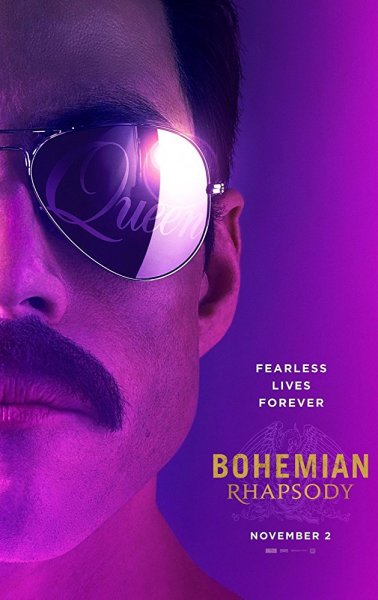 I adore Queen. I’ve loved them since I first discovered them in middle school and I adore them to this day. They were a band that, in many ways, was ahead of its time. While all of them brought different strengths to the table, I think it’s fair to say that the band is most remembered for the vocal talents of its late lead singer, Freddie Mercury. Freddie had a voice that has yet to be topped and had a personality that was as large as his vocal range. But he was also a very private man and kept much from the limelight. It was only a matter of time before someone made a movie about him and about his time in Queen and that’s exactly what Bohemian Rhapsody is. While it’s more about Queen than about Freddie, Bohemian Rhapsody, written by Anthony McCarten and directed by Bryan Singer (with Dexter Fletcher completing the film after the firing of Singer), tells the story of Freddie and Queen, from their beginnings in the early 1970s through their monumental performance at Live Aid in 1985. It’s an enjoyable film, though one that never really explores its subject as deeply as you’d like it to.
 Thoroughly Modern Reviewer