

The first arc of Rodney Barnes and Jason Shawn Alexander’s Killadelphia ranked among my favorite comics of 2020. It was a breathtaking, gorgeous, layered story that blended absurd-yet-scary horror with gritty, grounded character drama. So, naturally, I was pretty excited to see where the comic would go from there. That first volume ended in a way that opened numerous narrative doors for future stories. And that’s a pretty exciting place for a second arc to find itself. Now, to be fair, Barnes and Alexander certainly take advantage of those numerous avenues—but it comes at the cost of narrative coherence. While the first volume of Killadelphia was something new and exciting, the second volume feels like more of the same—with all of the pros and cons that come with that. The world is explored with more depth, but the narrative is often unfocused, with an ending that’s less of an ending and more of a beginning for another story. There’s too much going on and not enough time to explore it with. (3 out of 5 wands.)
NOTE: This review will remain as spoiler free as possible.
Continue readingKilladelphia vol.2 – “Burn Baby Burn”
Written by Rodney Barnes
Illustrated by Jason Shawn Alexander
Adams’ battle to reshape the United States in his own twisted vision might have been thwarted for now, giving Jimmy Sangster a moment of respite, but the war for a new America rages on! Now, as Abigail steps out of the shadows, she unleashes a new violent terror upon the city some have renamed Killadelphia. But this time, it’s about creating as widespread a web of fear imaginable as she rips the beating heart from the city itself.Can Jimmy stop her or will history repeat and force him to meet the same fate as his father?


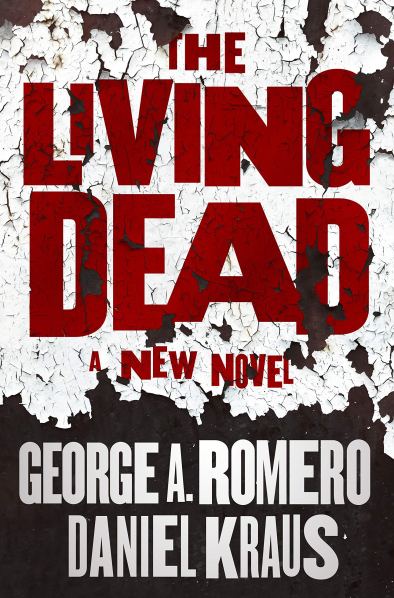 Zombies are one of my favorite horror story “monsters.” There’s something so haunting about a threat that is basically humanity but slightly… off. Zombies don’t have a motive; there’s no reason why they do the things they do. They simply operate off a basic needs-based system. They’re the very definition of id: they need to feed and they need to feed now. There’s something scary about a foe that looks exactly like us but cannot be reasoned with or stopped. But, all that aside, the most interesting thing about zombies is the way the stories that feature them force us to take a good look at ourselves. A common theme in most zombie stories is how the plague turns humanity into the real monsters. It’s one of my favorite tropes of the genre and something I love to see various storytellers sink their teeth into. Nobody was better at this than George A. Romero. His films pioneered the modern zombie genre by focusing their lenses on the intimate human stories rather than the epic, action-packed survival stories we might see today. Romero seemed most interested in how individual people react to zombies rather than what, specifically, caused them or how they might be defeated. It’s what made his films interesting and it’s what makes his novel, The Living Dead (completed by Daniel Kraus after Romero’s passing), interesting. The novel is more epic in scale than any of Romero’s films but feels no less intimate than the best of his work. It’s a brilliant achievement in the career of a man who had many brilliant achievements and it’s quite possibly one of the best zombie novels I’ve ever read. (4.5 out of 5 wands.)
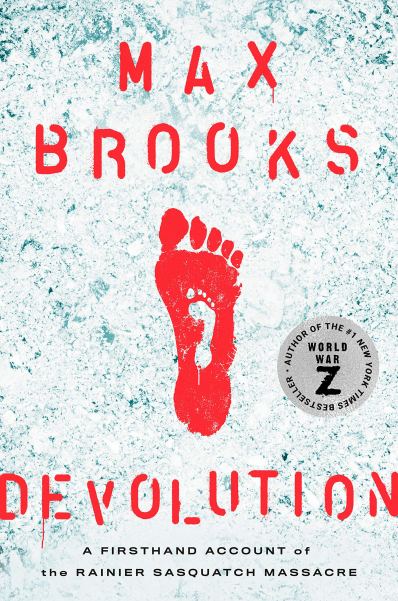
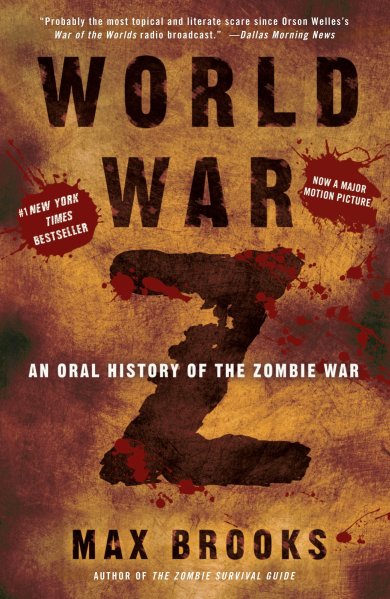 I imagine a lot of people are going to be reading zombie books during this COVID-19 crisis. Just like the Contagion film has seen a spike in popularity, so too, I feel, will many zombie stories. I can’t blame people for turning to fiction during this time of crisis; it can be cathartic to view a disaster movie in a time of disaster. But that’s not why I finally picked up World War Z. World War Z is one of those books I’ve been meaning to read for years. It’s frequently touted as one of the best zombie novels. I read an early screenplay for the film – back when it still tried to adhere to the book’s structure – and loved that, but I just never got around to reading the book. And then I heard that the novel’s author, Max Brooks, was publishing a new novel this year – Devolution – and I thought now was the time to finally give World War Z a read. At the end of the day, I totally see why World War Z is as beloved as it is. It’s a really unique take on the zombie genre, combining it with a traditional oral history of a real-world war is a stroke of genius. But I don’t know that I loved this book. It’s good, but the hype might have killed it for me. (Mild spoilers may follow.)
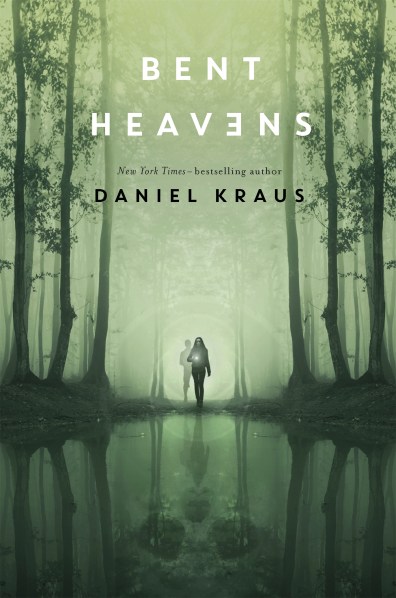 I don’t normally review YA novels for the sheer fact that they so rarely appeal to me. I’m not a huge fan of a lot of the typical fare they cover (teenage drama, lots of romance, etc) so I tend to stay away from them. But I’ve read some of Daniel Kraus’ previous work, the most recent being his adaptation of The Shape of Water, and really enjoyed it. So, when I saw that he had a new book coming out and read the book’s synopsis, I was definitely intrigued. It sounded like the kind of thing that might be right up my alley (being an avid lover of Science Fiction and Horror), so it seemed like a fun book to look into. Having now finished it, I can say that it was a good decision on my part. It’s a really well-written story that does its damndest to defy the normal constraints of its genre. I really enjoyed it and I think it’ll be a good read for a number of different audiences – including, but not limited to, the YA crowd. (Mild spoilers may follow.)
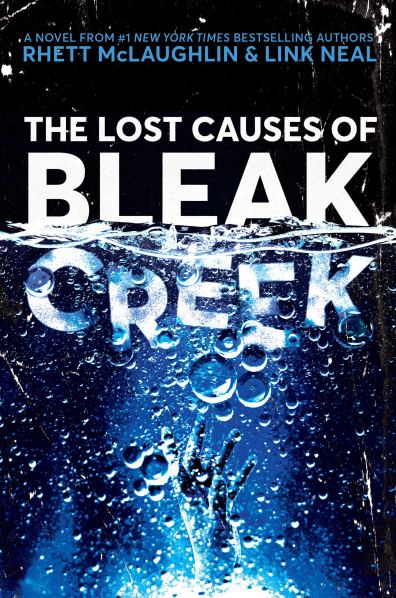 I’ve been a fan of Rhett and Link’s for a while now. Their content is so wholesome and enjoyable – and they grew up fairly close to where I live – so it’s hard for me not to enjoy their stuff. My love of Rhett and Link is what led me to their first novel, The Lost Causes of Bleak Creek. Were it not to have been written by them, it likely would have never made its way onto my radar. But, with its connection to these YouTubers, I eagerly awaited the publication of the book, unsure of exactly what to expect. Well, having read The Lost Causes of Bleak Creek definitely feels like a first novel. And I don’t really mean that as an insult, but an author’s first novel is often very imperfect and that’s exactly what The Lost Causes of Bleak Creek is – imperfect. There are a lot of really good ideas and characters scattered throughout the book, but it’s all a bit hampered by too-few pages and uneven pacing. (Mild Spoilers for The Lost Causes of Bleak Creek follow.)
 Thoroughly Modern Reviewer