
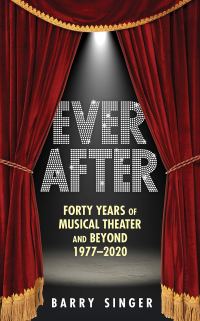
Covering forty years’ worth of Broadway shows in a single book is a monumental task. Covering forty years’ worth of Broadway shows in less than 500 pages is a nearly impossible task. And yet that’s exactly what Barry Singer’s Ever After: Forty Years of Musical Theater and Beyond attempts to do. Unfortunately, it doesn’t really hit the mark. For those hoping for a glimpse behind the scenes of their favorite musicals, Ever After isn’t the book for you. It’s less of a historical account and more of a collection of reviews. In that context, it’s not too bad. However, the first half of the book is particularly hard to power through and the book’s general lack of depth hinders much of the enjoyment. (3 out of 5 wands.)
NOTE: I received a review copy of Ever After from the publisher. All thoughts are my own.
Continue readingEver After: Forty Years of Musical Theater and Beyond, 1977-2020
Written by Barry Singer
Before Ever After appeared in 2003, no book had addressed the recent past in musical theater history—an era Singer describes as “ever after musical theater’s many golden ages.” Derived significantly from Singer’s writings about musical theater for the New York Times, New York Magazine, and The New Yorker, Ever After captured that era in its entirety, from the opening of The Act on Broadway in October 1977 to the opening of Avenue Q Off-Broadway in March 2003. This new edition brings Ever After up to date, from Wicked, through The Book of Mormon, to Hamilton and beyond. Once again, this the first book to cover this new, pre-pandemic age of the Broadway musical.



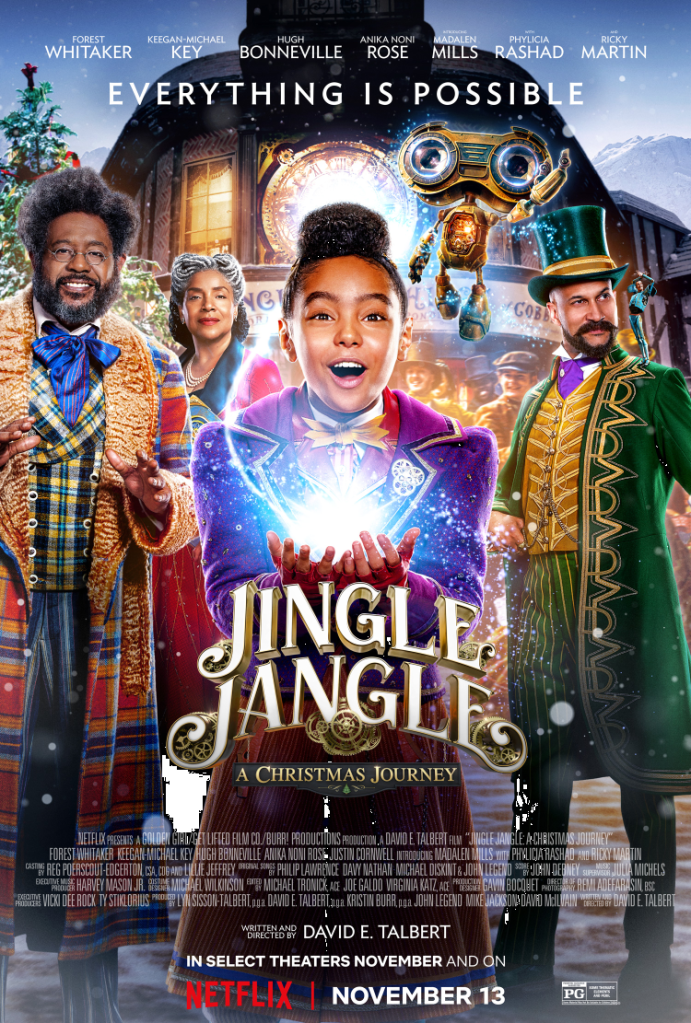
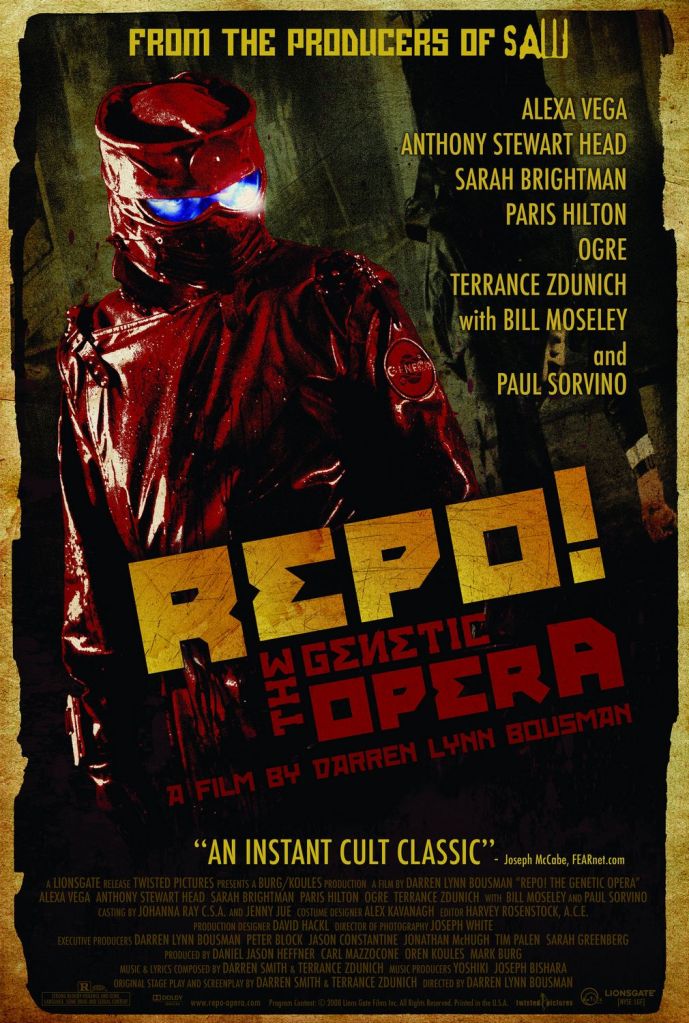

 1955’s Damn Yankees, with a libretto by George Abbott and Douglass Wallop, music by Richard Adler, and lyrics by Jerry Ross, is iconic in its own right. It is a retelling of the classic Faust story, with Joe Boyd selling his soul to Mr. Applegate in order to play for his favorite baseball team – the Washington Senators. It marked the first collaboration between Bob Fosse and Gwen Verdon, leading to their multi-decade relationship and partnership. It ran for 1,019 performances on Broadway and spawned a reasonably successful film adaptation in 1958. So, why is Damn Yankees revived so rarely? Aside from a short, but successful, run in 2008 as part of the City Center Encores! Series, the last major American production of the show was its 1994 revival – a revival that ran for over two years, itself. If the show is as popular as it seems, why is it so rarely done outside of schools and other smaller theatres? Perhaps it has something to do with its subject matter and how well it has stood the test of time? That is certainly true for other Golden Age musicals. But is it true for Damn Yankees? Maybe not. In fact, Damn Yankees is one of the rare Golden Age musicals that holds up relatively well. However, there are certainly things that can be done to make it more appealing for a modern audience – most notably an update in its depiction of women.
 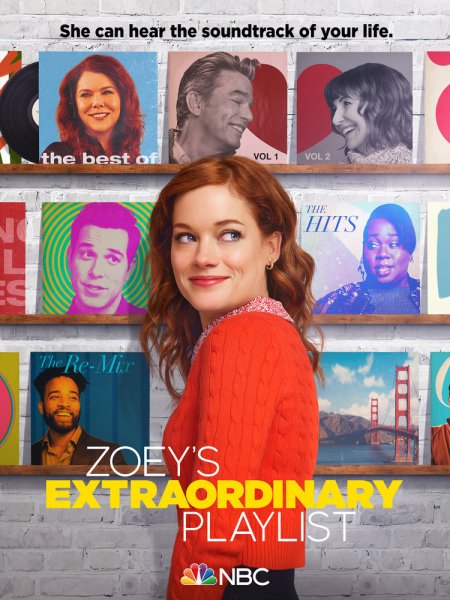 It should come as no surprise to anyone that I love a good musical. There’s something that’s just so fun about musicals. Something so heartfelt about that. I’ll also be one of the first to admit that it’s incredibly difficult to pull off a TV show that’s also a musical. Musical films are a little easier to do, but musical shows seem unable to find a way to balance all of the necessary elements in a way that’s sustainable in the long term. Glee came the closest, but its writing quickly fizzled out after a few seasons and both SMASH and RISE failed to attract a large enough audience to justify their existence. But along comes Zoey’s Extraordinary Playlist, a show that owes a lot to those previous attempts at musical tv shows. Having seen the first four episodes of its first season, it seems that Zoey’s Extraordinary Playlist might have found a way to balance all of the elements of a good musical with the necessary elements of a long-running TV show. But the question still remains if it can find an audience and/or maintain its quality writing and energy in the long term. All of that aside, these first four episodes are pretty darn good, though.
 We’re living in a golden age of the Live TV musical. Every year since 2013, we’ve gotten a new live broadcast of a famous musical. There are usually star-studded, filled to the brim with well-known actors from the stage and screen, and no expense is spared when it comes to the set and costumes. Why, then, are these productions usually met with reactions that range from indifference to hatred? Do we live in a society that finds itself too cynical to enjoy a good old musical? I don’t think so. I think the problem lies less with the audience and more with the creative team and the producers of these productions. In general, each of these productions has had at least one of four problems that result in their less-than-stellar reception: the choice of musical was questionable, the cast wasn’t great, the live audience (or lack thereof), or the camerawork. The teams behind each of these productions had their hearts in the right place, but nearly all of them fell into one of those traps, resulting in audience derision.
  Thoroughly Modern Reviewer