
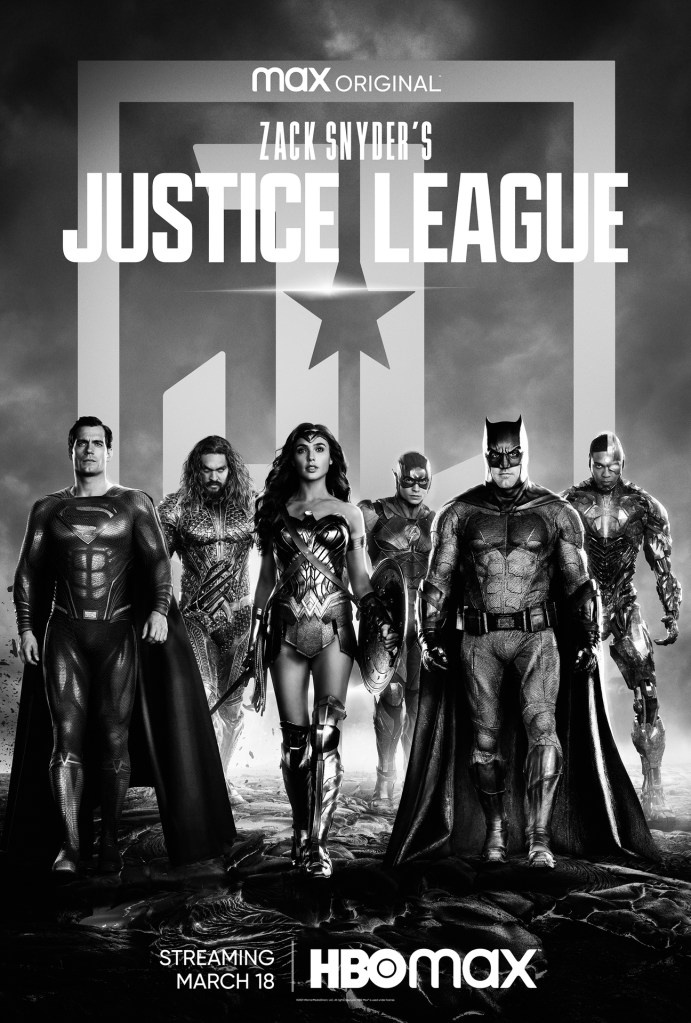
Three and a half years after the release of the maligned theatrical cut of Justice League, Zack Snyder’s original cut of the film is almost here. It’s been a long time coming but thanks to the support of many fans and the desperation of a streaming service in need of new content, the world can finally see Snyder’s full take on the Justice League. The biggest question on everyone’s minds is whether this new cut is better than the theatrical cut. The answer is both simple and complicated. In many, if not most, ways, Zack Snyder’s Justice League is miles better than the theatrical cut. However, even with all the extra content and context, this new cut provides, several of the theatrical cut’s problems remain. And they’re joined by some new problems exclusive to this version. It’s not a bad movie or anything—it often borders on being a good one. But it’s a too-long film that suffers from bad pacing, a lack of focus, and characters that still feel more like archetypes than three-dimensional people. Long story short, it’ll please those who adore Snyder’s movies, annoy those who hate them, and leave the rest of us in a middle ground of partial pleasure and partial displeasure. (3.5 out of 5 wands.)
NOTE: This review will generally be spoiler free. There may be references to plot points that are shared between both cuts of the film, but most of the newer stuff will be hinted at instead of spoiled.
Continue readingZack Snyder’s Justice League
(written by Zack Snyder and Chris Terrio; directed by Zack Snyder)
Batman (Ben Affleck) and Wonder Woman (Gal Gadot) enlist a team capable of protecting the world from the impending threat of Steppenwolf (Ciarán Hinds) and his Parademon army, who are scouring the universe for three hidden Mother Boxes that would enable Steppenwolf to transcend worlds, lay waste to all enemies, and restore his good standing with his master, Darkseid (Ray Porter). Though most of Batman and Wonder Woman’s initial efforts are met with resistance, they ultimately recruit Aquaman (Jason Momoa), Cyborg (Ray Fisher), and The Flash (Ezra Miller). But in order to help preserve the future of mankind, first they must each overcome their own demons.After Steppenwolf secures two of the boxes buried deep within Themyscira and Atlantis, the superheroes are forced to take advantage of Cyborg’s unique connection to the one remaining. Harnessing the box’s capabilities to resurrect a final team member (Henry Cavill), they inadvertently provide Steppenwolf with an opportunity to obtain it – setting him up for imminent domination. With DeSaad and Darkseid waiting in the wings and posing catastrophic threats of their own, can this unique band of heroes dismantle the Mother Boxes before Steppenwolf’s synchronization is complete?

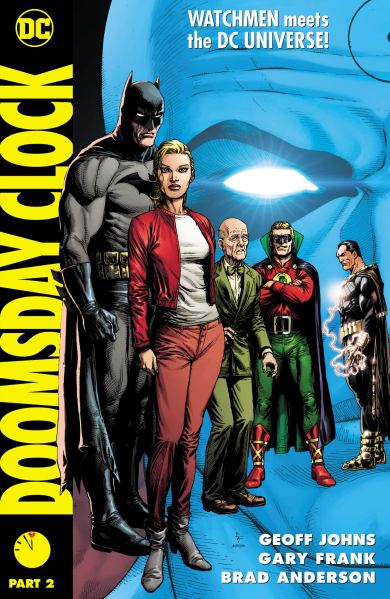 I really wish Doomsday Clock was better than it is. I love Alan Moore and Dave Gibbons’ Watchmen and I really enjoy the DC Universe; I even thought much of the lead up to this series was very good – or, at least, intriguing. But then the actual series came out and it was plagued by so many delays in its publication that it genuinely became difficult to follow the story as it went on. Unfortunately, rereading the whole series upon its completion didn’t really make it much easier to follow. But, I suppose, that’s in line with the original Watchmen graphic novel. (This review covers all twelve issues of Doomsday Clock and may contain mild spoilers.)
 As if enough things haven’t been written about this movie, here comes another one. Ever since the announcement of this movie, I’ve been skeptical. The Joker is a character who has, historically, never had a definitive origin story – nor has he ever needed one. The entire point (and fun) of the character is that he has no origin. Various stories have hinted at one (The Killing Joke, The Dark Knight) but all have shied away from suggesting any of those origins is the definitive one. So, this movie being entirely about how the Joker became the Joker worried me a bit, though that worry was squashed a bit when they made it clear this movie wouldn’t tie into the larger DCEU and would be the cinematic equivalent of one of DC’s Elseworlds stories. With that context, it was a bit easier to get on board with a film like this. Then came all of the controversy surrounding the film – the articles about how it was irresponsible, the security concerns, etc – and the whole thing began to get a little messy. It was difficult to know what the film was actually saying versus what people were accusing the film of saying. The big question, now that opening weekend has come and gone without much incident, is whether Joker is a good movie that gets across all that it is trying to say. The answer? Yes, mostly. (NOTE: This review will contain some light spoilers for the movie, but this is one of those films where you pretty much already know how it ends; it’s not filled with surprises, but the enjoyment comes from the journey it takes you on.)
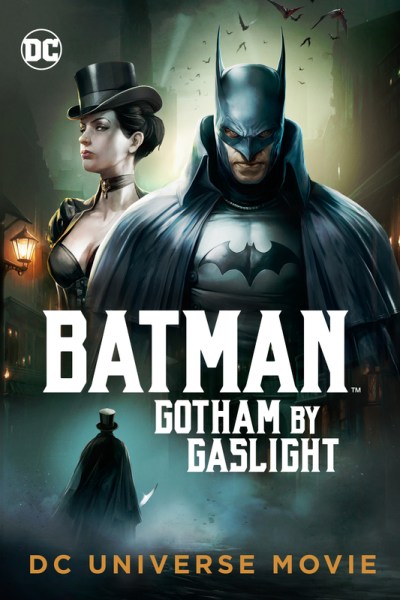 It’s been a while since I’ve seen such a remarkably well made Batman film. It’s even more impressive that said amazing film is a straight-to-DVD animated adaptation of a short Elseworlds graphic novel – a series of graphic novels from DC Comics that takes popular characters and places them in new situations/settings/etc. Batman: Gotham By Gaslight is an adaptation of the graphic novel of the same name, originally written by Brian Augustyn and featuring art from Mike Mignola, placing Bruce Wayne/Batman squarely in the late 1800s in Gotham City, where it seems that the infamous Jack the Ripper has relocated to continue his spree of terror by murdering women. Written by James Krieg and directed by Sam Liu, Batman: Gotham by Gaslight follows the Caped Crusader as he works – from the shadows – to stop Jack the Ripper’s reign of terror before it can get any worse while dodging the ever-suspicious Gotham police. If ever there were a crime from the world’s greatest detective, this would be it. (Mild spoilers follow.)
  Man, I desperately wanted to like this. I will go to my grave defending Batman v Superman (particularly the Ultimate Edition, where the story actually made sense), but Justice League is, unfortunately, a bit of a mess. A fairly enjoyable – at times – mess, but a mess, nonetheless, and I’m not sure whose fault it is. Directed by Zack Snyder (with substantial reshoots and editing supervised by Joss Whedon) and written by Chris Terrio and Joss Whedon, Justice League is the DCEU’s equivalent of 2012’s The Avengers (also directed by Whedon). It brings the mightiest DC superheroes – Batman (Ben Affleck), Wonder Woman (Gal Gadot), The Flash (Ezra Miller), Aquaman (Jason Momoa), Cyborg (Ray Fisher), and Superman (Henry Cavill) – together for the first time as they team up to defend the earth from an intergalactic – and multi-dimensional? – threat: Steppenwolf (Ciarán Hinds). (Mild spoilers ahead)
 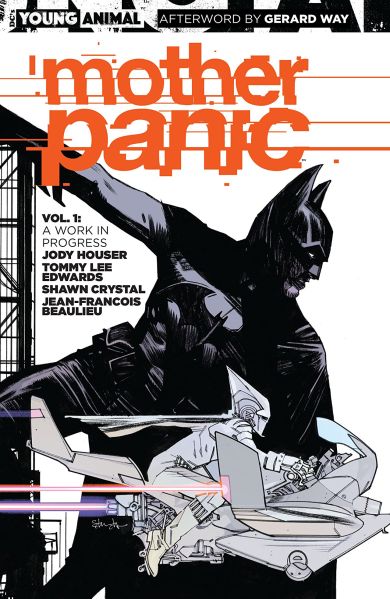 Better late than never, I suppose. I meant to review the first volume of Jody Houser’s Mother Panic back when it came out a few weeks ago, but life gets in the way sometimes. So here we go. Mother Panic is one of the several new comics from the Young Animal line from DC, headed by Gerard Way.
 Over the past month, DC Comics has been publishing a crossover between Tom King’s Batman run and Joshua Williamson’s The Flash entitled The Button. This crossover picks up from where the DC Rebirth One-Shot left off, with Batman and the Flash discovering the Comedian’s (from Alan Moore’s Watchmen) smiley-face button stuck in the wall of the Batcave. The crossover follows Batman and the Flash as they try to track down the source of the radiation being emitted by the button while facing off against a series of personal and emotional obstacles thrown their way, seemingly on purpose.
 Thoroughly Modern Reviewer