
 You never know what you’re gonna get with an indie/low-budget horror movie. You could get a movie that’s super charming and works really well within the constraints forced upon it (by budget/time/available talent/etc) or you could get something that’s truly appalling and devoid of any entertainment value whatsoever. Or you could get something somewhere in between, where it’s clear that a lot of love went into the creation of the film but some element of its making went catastrophically wrong. That’s the joy of looking into a low-budget horror movie. For every gem (like Rubber), there’s an enjoyable-yet-bad film (like Attack of the Killer Tomatoes), and at least three films that are too awful to watch (like Thankskilling, half the Troma catalog, or Birdemic). So, where does Headshots fall in this breakdown? Well, much to my surprise and enjoyment, it falls within the first camp. Headshots is a charming film that makes the most of its constraints and brings an interesting twist to its premise. (Mild spoilers follow!)
Headshots (written and directed by Chris O’Neill)
HEADSHOTS follows a young British actress who goes to LA to be a movie star- only to cross paths with a serial killer in her acting class.
 To say the first Zombieland film was a pretty solid horror-comedy feels like an understatement, but that’s what it was. At the time of its release, it felt groundbreaking as hell. Sure, it wasn’t the first comedic horror film (or even the first comedic zombie film), but it was one of the first films of its ilk to be as scary as it was funny. Audiences hadn’t really seen such a well-executed horror/meta-comedy since the days of the first Scream film and it hit pop culture with a splash before fading into obscurity. A sequel has long been requested, with the writers and director all saying they were working on one but didn’t want to make it until they felt they’d cracked the story. Well, it’s a full ten years after the release of the first film, and I guess they’ve cracked the story as Zombieland: Double Tap releases in theaters today. The two questions on everyone’s mind are: “is it good?” and “how does it compare to the first film?” Unfortunately, the answers to those questions aren’t too positive. (This review will be as spoiler-free as possible, but any elements that have been shown in trailers may be discussed.)
 Novelizations of movies can really be a hit or miss affair. The best ones take the events that happen within a film and expand upon them in ways only a novel can do – bringing readers into the thoughts of the characters within a film and showing those same events from a different angle or with extra bits that the film might not have had time to show. Unfortunately, most film novelizations don’t do that – they to just be fairly strict prose conversions of the script. So, it’s with that mindset that I approached this “novelization” of Guillermo del Toro’s award-winning Pan’s Labyrinth – I hesitate to call this book a novelization because Pan’s Labyrinth came out thirteen years ago and most novelizations come out around the same time as the film they’re novelizing. With that context, it might be best to consider this book a retelling of the story featuring in the film – a screen-to-page adaptation, if you will, by a talented author – Cornelia Funke. As is always the case with any adaptation, does the story still work when transferred to this new medium? In the case of Pan’s Labyrinth: The Labyrinth of the Faun, the answer is yes and no.
 The Chucky/Child’s Play franchise is a really interesting one. It started off with a pretty standard horror film about a creepy doll before it devolved into a series of sequels that grew more and more comedic, eventually coming back around to more serious horror once again with the latest few sequels. But with so many sequels, the continuity of the series has become a bit difficult to follow. So, perhaps it was about time for a reboot to happen. Could new life be breathed into this old franchise by some new creatives? Or would it just end up being another in a long list of subpar remakes of classic horror films? With this new Child’s Play, it’s a bit of both. (Mild spoilers follow!)
 I’ve been a fan of Welcome to Night Vale, the podcast cocreated by Joseph Fink – author of this novel, Alice Isn’t Dead – and Jeffrey Cranor since around about 2013. It’s a lovely little podcast that perfectly mixes together a whole bunch of genres into its own little piece of brilliance. When it was announced that Fink and Cranor would launch an entire podcasting network, named “Night Vale Presents”, with a brand new podcast written by Joseph Fink, I was immediately interested. And then… I never got around to listening to it. It had a cool premise and seemed really intriguing and spooky, but I just never quite found the time. Then, it was announced earlier this year that Joseph Fink was going to turn that podcast, Alice Isn’t Dead, into a book that, essentially, told the same story as the podcast and I figured I’d just wait for the book to come out and experience the story in that medium. Months passed and I’ve now read the book and, I gotta tell ya, it’s really, really good.
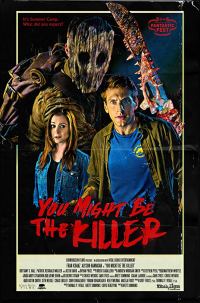 Who doesn’t love a good scary movie around Halloween? I’m a bit of a wuss, so I like my scary movies to not be too scary. I enjoy being spooked but not being scared so far out of my wits that it’s unpleasant. Because of that, it’s often hard for me to find good, new scary movies to watch since so many modern horror movies rely on jump scares that just make me anxious to a degree that’s entirely unenjoyable. Then along comes You Might Be The Killer, written by Brett Simmons, Thomas P. Vitale, and Covis Berzoyne and directed by Brett Simmons.
  The Strange Case of Dr. Jekyll and Mr. Hyde, by Robert Louis Stevenson, was one of the only books given to me as assigned reading in high school that I actually enjoyed. It’s a wonderfully macabre Gothic novella that explores the duality of man within a really interesting sci-fi scenario. I enjoyed the book so much in high school that it actually led to me watching the fantastic BBC series Jekyll (a show that actually ended up being a really interesting sequel to the original story). So, naturally, when I saw that Anthony O’Neill’s Dr. Jekyll & Mr. Seek, a sequel to the original Jekyll & Hyde, I was immediately interested. The question is: how good is this book? Is it a worthy sequel to such an amazing original? The short answer is: no, not really. But it’s more complicated than that.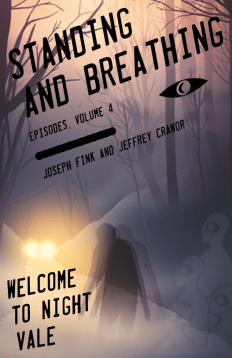
 Thoroughly Modern Reviewer