I get why horror fans don’t like Bride of Chucky. It’s more of a melodramatic comedy with horror elements than a true, traditional horror film. I can see how that might be divisive. However, I loved this movie. Yes, it’s over the top. And yes, the plot makes no sense. But man, is it fun. Everything about Bride of Frankenstein is deeply enjoyable—from the self-referential humor, to the almost soap opera-esque plot, to the over-the-top kills. This movie just oozes creativity, and it’s exactly the breath of fresh air the Chucky franchise needed.
Well, as I predicted, the Child’s Play formula overstayed its welcome. Child’s Play 3 is easily my least favorite of the trilogy. Everything about this film feels tired. It’s the same old basic plot. Chucky (Brad Dourif) finds Andy (Justin Whalin)—this time, at a military academy. Chucky tries to either kill him or take someone’s body—this time, Chucky goes after Tyler (Jeremy Sylvers), one of the other boys at the academy. Nobody believes Andy when he warns them of Chucky’s danger. People slowly start dying, with Andy looking like the most logical culprit. Eventually, things hit a climax as Chucky reveals himself and tries to transfer his soul to another body. Yawn.
There’s something special about big movie musicals. The way the music, visuals, performances, and spectacle all mesh together—there’s just nothing like it. Even when they’re bad, there’s still some joy to be found in them. In the Heights is one of those musicals that’s been begging for a film adaptation since it first debuted. It’s just so joyous and full of energy, with Lin-Manuel Miranda’s (Hamilton) trademark earwormy music and a lovely, heartfelt story. It’s no wonder fans have been waiting a decade for this movie. And thankfully, after a period of development hell that saw the film pass between producers and studios, In the Heights finally has its film adaptation—directed by Jon M. Chu and written by Quiara Alegría Hudes (the musical’s original writer). And it’s good. Honestly, as a fan of the stage version, I can’t imagine how it could be much better. In the Heights is unabashedly a musical. It’s filled with breathtaking beauty, realistic characters, and so much charm. You’ll laugh, you’ll cry, and you’ll feel a part of a community. It’s everything I could’ve wanted and more. (4.5 out of 5 wands.)
“In the Heights“ Written by Quiara Alegría Hudes Directed by Jon M. Chu Music and Lyrics by Lin-Manuel Miranda The creator of “Hamilton” and the director of “Crazy Rich Asians” invite you to the event of the summer, where the streets are made of music and little dreams become big… “In the Heights.” Lights up on Washington Heights… The scent of a cafecito caliente hangs in the air just outside of the 181st Street subway stop, where a kaleidoscope of dreams rallies this vibrant and tight-knit community. At the intersection of it all is the likable, magnetic bodega owner Usnavi (Anthony Ramos), who saves every penny from his daily grind as he hopes, imagines and sings about a better life. “In the Heights” fuses Lin-Manuel Miranda’s kinetic music and lyrics with director Jon M. Chu’s lively and authentic eye for storytelling to capture a world very much of its place, but universal in its experience.
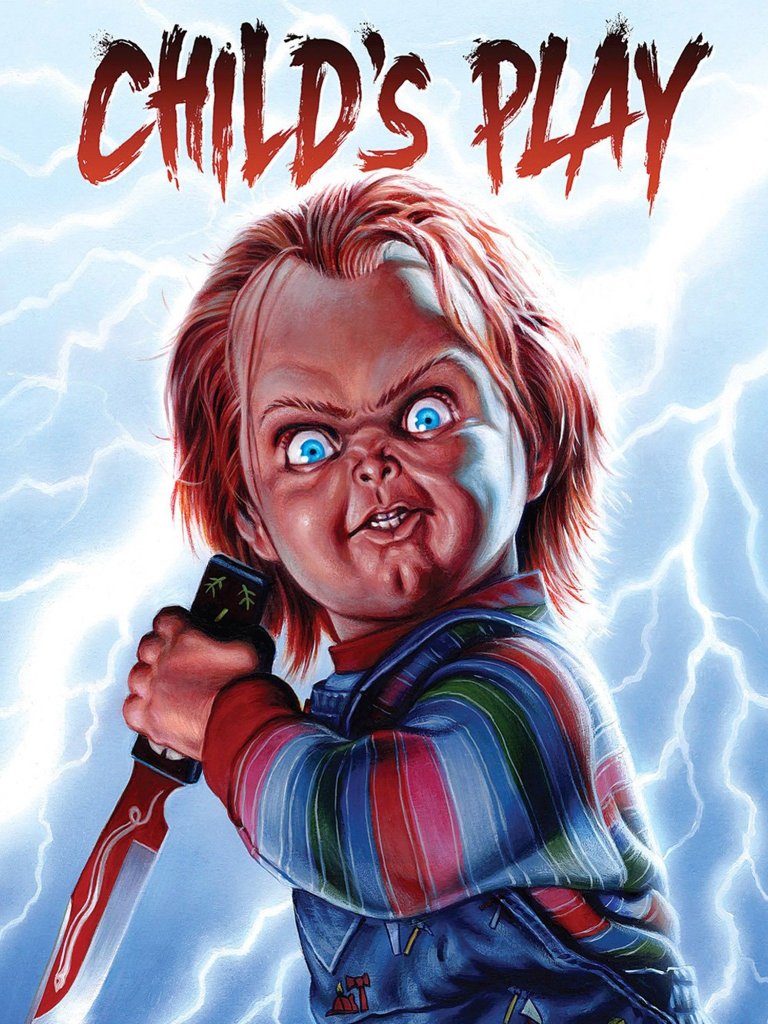
This might be controversial, but I enjoyed Child’s Play 2 more than I enjoyed the first film. Yes, it’s an obvious rehash of Child’s Play, but without the need for tons of exposition, the movie simply gets right to all of the good stuff, resulting in a more dynamic, fast-paced film. This time around, it’s two years after the Chucky doll’s first murder spree, and Andy’s been bouncing around the foster system after his mother was institutionalized for standing by Andy and his stories about Chucky. As the film begins, Andy is taken in by a foster family, only for a re-awakened Chucky to quickly find him and resume his reign of terror. The rest of the film plays out similarly to the original Child’s Play: Chucky terrorizes Andy and his (foster) family, nobody believes Andy about Chucky, and a trail of carnage leads to an explosive climax.
Believe it or not, I’ve never seen a Chucky movie. I know a lot about the franchise thanks to culture osmosis, but I’ve never sat down to watch any of the films. With SyFy working on a TV continuation of the franchise, I figured now was the perfect time to give the movies a watch. And what better place to start than at the beginning, with 1988 Child’s Play. It’s weird watching this movie and knowing that Chucky is going to be a cultural icon because while this is a great horror film it doesn’t have a lot of the trademarks associated with a Chucky film. The kills aren’t particularly gnarly, Chucky’s not cracking a bunch of jokes, and Chucky’s not even in the movie much. It’s more of a thriller than a horror movie, but that doesn’t make it any less fun.
I grew up right around the time Blockbuster started dying. I can remember occasionally going to my local Blockbuster with my family and renting videos, but it wasn’t something we did all that often. With that said, I still have quite a nostalgic kick for the idea of Blockbuster—and video stores in general. For me, video stores are akin to libraries—they’re places you can go to find new films that are curated by people trying to give you a positive experience. And, in that regard, I will always be a little sad about the demise of video stores. Yes, it’s far easier and more convenient to just rent a digital copy of a film from Amazon or iTunes or whatever, but you lose out on that curation, on that sense of community. And it’s this very point that gets highlighted in The Last Blockbuster, a documentary about, well, the last Blockbuster in the world.
Godzilla vs Kong gave me everything I wanted. Is it an amazing film? No, of course not. But it is a very fun one. My biggest complaint of the MonsterVerse films has always been an overreliance on human characters at the expense of the Titan characters. While Godzilla vs Kong still has a few too many human-based plotlines, the focus always feels squarely on Kong and Godzilla. By tying their plotlines into Godzilla and Kong’s respective character arcs, the filmmakers make it a lot easier to enjoy the human stuff. The movie’s not really about the humans; it’s about Godzilla and Kong—and it’s about time! It’s a simple movie. The bad guys are looking for an energy source from the Hollow Earth for ~questionable~ reasons and they need a Titan to help guide them through the Hollow Earth. So, they team up with a scientist (Dr. Andrews) and her adopted daughter (Jia), who’ve learned to communicate with King Kong, to use Kong as their guide. Meanwhile, Godzilla senses a new threat and begins attacking various human settlements while also hunting down King Kong, who he feels is a threat to his dominance.
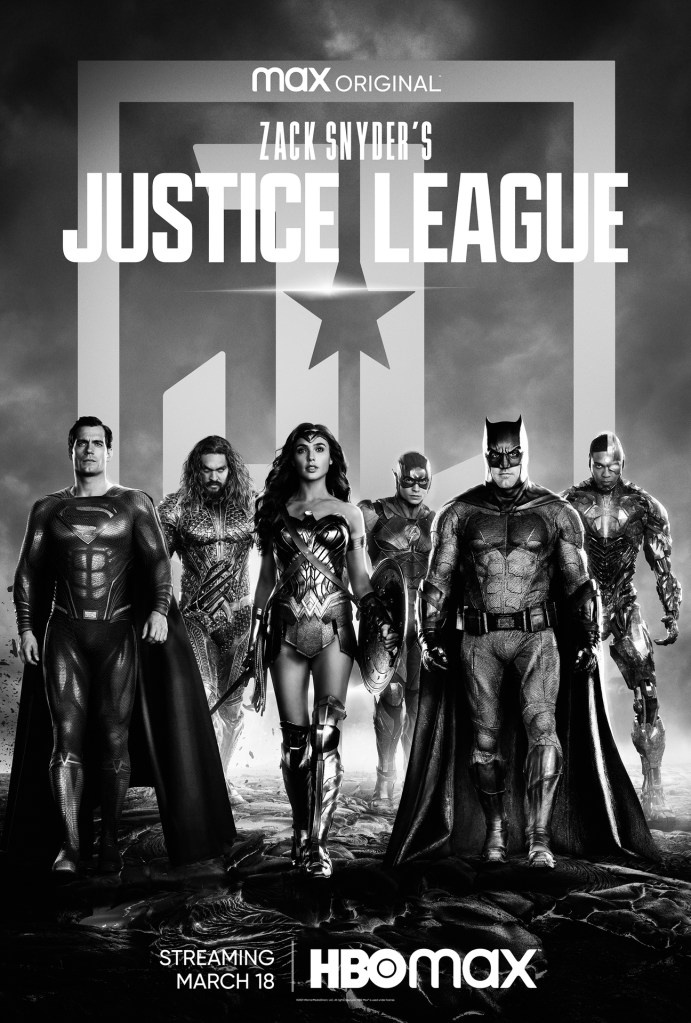
Three and a half years after the release of the maligned theatrical cut of Justice League, Zack Snyder’s original cut of the film is almost here. It’s been a long time coming but thanks to the support of many fans and the desperation of a streaming service in need of new content, the world can finally see Snyder’s full take on the Justice League. The biggest question on everyone’s minds is whether this new cut is better than the theatrical cut. The answer is both simple and complicated. In many, if not most, ways, Zack Snyder’s Justice League is miles better than the theatrical cut. However, even with all the extra content and context, this new cut provides, several of the theatrical cut’s problems remain. And they’re joined by some new problems exclusive to this version. It’s not a bad movie or anything—it often borders on being a good one. But it’s a too-long film that suffers from bad pacing, a lack of focus, and characters that still feel more like archetypes than three-dimensional people. Long story short, it’ll please those who adore Snyder’s movies, annoy those who hate them, and leave the rest of us in a middle ground of partial pleasure and partial displeasure. (3.5 out of 5 wands.)
NOTE: This review will generally be spoiler free. There may be references to plot points that are shared between both cuts of the film, but most of the newer stuff will be hinted at instead of spoiled.
Zack Snyder’s Justice League (written by Zack Snyder and Chris Terrio; directed by Zack Snyder) Batman (Ben Affleck) and Wonder Woman (Gal Gadot) enlist a team capable of protecting the world from the impending threat of Steppenwolf (Ciarán Hinds) and his Parademon army, who are scouring the universe for three hidden Mother Boxes that would enable Steppenwolf to transcend worlds, lay waste to all enemies, and restore his good standing with his master, Darkseid (Ray Porter). Though most of Batman and Wonder Woman’s initial efforts are met with resistance, they ultimately recruit Aquaman (Jason Momoa), Cyborg (Ray Fisher), and The Flash (Ezra Miller). But in order to help preserve the future of mankind, first they must each overcome their own demons.
After Steppenwolf secures two of the boxes buried deep within Themyscira and Atlantis, the superheroes are forced to take advantage of Cyborg’s unique connection to the one remaining. Harnessing the box’s capabilities to resurrect a final team member (Henry Cavill), they inadvertently provide Steppenwolf with an opportunity to obtain it – setting him up for imminent domination. With DeSaad and Darkseid waiting in the wings and posing catastrophic threats of their own, can this unique band of heroes dismantle the Mother Boxes before Steppenwolf’s synchronization is complete?
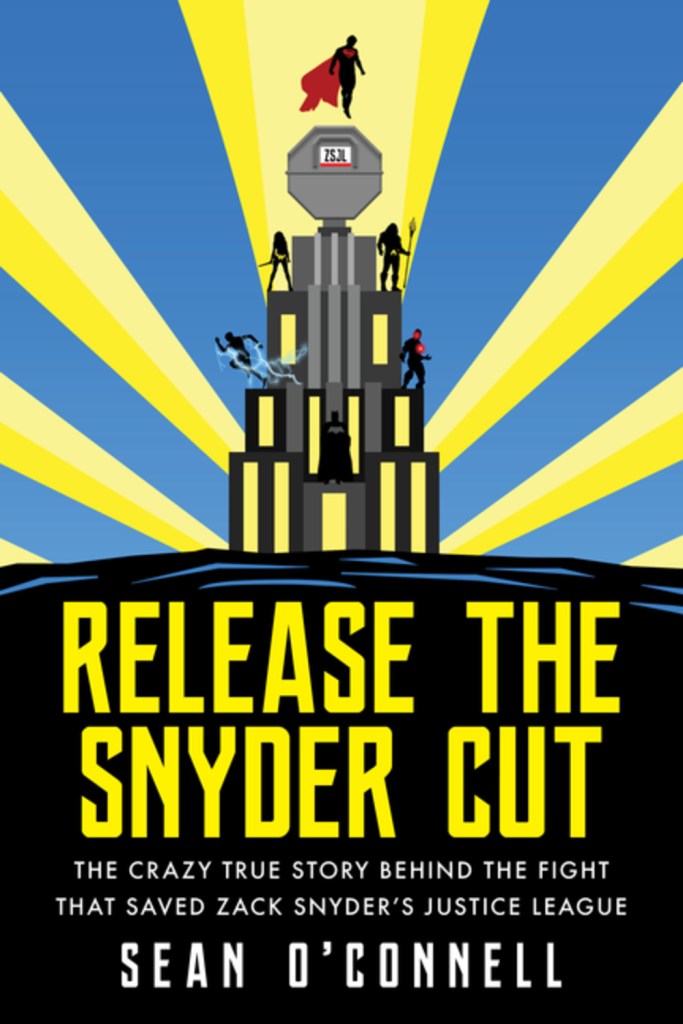
I’m a fan of creators having control over the things they create. Yes, to a degree, all art is a process of collaboration, whether it’s written or visual. But there’s nothing worse than seeing a creator either forced down an avenue they don’t want to explore or having their entire project taken out of their hands. The latter, it seems, is what happened with 2017’s Justice League movie. Full disclosure: I’m pretty neutral on Zack Snyder as a filmmaker—I’ve liked some of his films, and I’ve disliked some of his films. I’m also pretty neutral on the fandom that surrounds him—every fandom has positive and negative elements, and I think it’s disingenuous to paint any fandom based on its worst aspects. So, I don’t have any skin in the discourse that surrounds the Snyder Cut. What I do have, however, is an interest in the behind-the-scenes stories of films like Justice League. This interest is what brought me to Sean O’Connell’s Release the Snyder Cut. Going into it, I was hoping for a well-sourced examination into the making of the Justice League movie—what went wrong, how it went wrong, and how we got to a point where Snyder’s original cut could be made. Unfortunately, that’s not what the book is. Instead, O’Connell’s book reads as more of an extended blog post, briskly chronicling the history of the DCEU—from its earliest days with Man of Steel up until the disastrous theatrical release of Justice League and the subsequent fan-driven campaign to restore Snyder’s original cut. It’s fine, but there’s not much here that isn’t available elsewhere. (3 out of 5 wands.)
NOTE: I received an ARC of this book from Edelweiss. All thoughts are my own.
Release the Snyder Cut: The Crazy True Story Behind the Fight That Saved Zack Snyder’s Justice League by Sean O’Connell Release the Snyder Cut is an entertaining, investigative, and emotional recap of 2017’s failed Justice League movie, followed closely by a breakdown of the exhaustive efforts by a dedicated fan base to unearth director Zack Snyder’s unfinished version. We’re currently in the golden age of superhero blockbusters. Movies like Black Panther, Wonder Woman, Joker, and Avengers: Endgame routinely break box office records and compete for Oscars. Yet, Zack Snyder’s 2017 behemoth Justice League—a veritable sure bet at the Hollywood casino—tanked miserably, and the behind-the-scenes reasons for the movie’s demise are fascinating. The true story behind Justice League’s failure is only half of the juicy narrative, though. Snyder—who left the project months before filming concluded—still fans the flames that surround the rumor of a “Snyder Cut” of the film. This allegedly is the version of the story he wanted to tell before the studio, Warner Bros., pulled him off of the project. Hence, the “Snyder Cut.” Pop-culture fans love a meaty mystery, and the controversy swirling around the lost Snyder Cut of Justice League has been captivating comic-book movie fans for years. Additionally, an army of passionate DC and Snyder fans are committed to getting the “Cut” released. They already have gone to incredible lengths to fight for the movie’s opening, and have found strength, support, and charitable goals in their global “family” of Snyder Cut supporters. Their stories are remarkable, and the book is just as much about the dedicated fans who make up the Snyder Cut movement as it is about the unreleased film. Their efforts finally paid off with the recent announcement that Snyder’s cut will be released in 2021 by Warner Bros. and HBO Max. Release the Snyder Cut tells the entire story.
Godzilla and King Kong were two characters I knew of growing up but whose films I’d never seen. Everything I knew of them had been gleaned through cultural osmosis—I knew Godzilla was inspired by/related to the droppings of the atomic bombs in Japan, I knew that King Kong regularly climbed tall buildings with damsels in distress in hand, and I knew that both creatures tended to be defenders of humanity, fighting against other monsters. But that’s about it. Until recently, I’d never seen even a minute of any film that featured them—outside of the Mystery Science Theater 3000 episodes that riffed a couple of Godzilla films from the 1960s/1970s. So, with the imminent release of Godzilla vs Kong on HBO Max, I thought it might be time to look into Hollywood’s latest attempt to resurrect both of these franchises—this time, in a shared universe called the “MonsterVerse.” I didn’t really know what to expect or how good the movies would be, but I was excited to watch them. And, having seen the three that have been released, they’re as much of a mixed bag as I suspected. Some of them are very good, some of them are less good. But there’s clearly a lot of fun to be had in this universe. So, in that spirit, I’d like to share some brief thoughts on the three MonsterVerse films that have been released, followed by my hopes for Godzilla vs Kong.
(NOTE: There are full spoilers for Godzilla, Kong: Skull Island, and Godzilla: King of the Monsters. Read at your own risk.)





 Thoroughly Modern Reviewer