
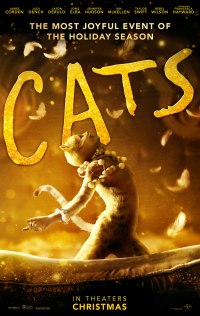
 All of us saw the trailer for this movie, and I’m pretty sure all of us felt the same wave of confusion and borderline-revulsion. Even if you were familiar with the hit Broadway musical that inspired this film, there was something about how uncanny the CGI looked that bordered on the horrifying instead of the cute. Not exactly the best start, yeah? Going into CATS, most of the audience probably expected a train wreck. I certainly did. That being said, whoever cut together the trailers for the film should not edit trailers for a living as the trailers were an awful representation of the movie. At the end of the day, CATS is neither as consistently weird throughout as you want it to be, nor is it as good as the film seems to think it is. There are plenty of weird moments, too, but once you get used to the CGI, it’s basically exactly the stage musical as you remember it. Is it fun? Yeah, most of the time. Is it worth seeing? Sure, at least once. But your overall enjoyment will depend almost entirely on how much you like the musical. I liked the movie a bit more than I liked the musical (for reasons that will become apparent) – but I also really don’t like the musical. (Very mild spoilers ahead.)
CATS (written by Lee Hall & Tom Hooper, directed by Tom Hooper)
Featuring Andrew Lloyd Webber’s iconic music and a world-class cast of dancers under the guidance of Tony-winning choreographer Andy Blankenbuehler (Hamilton, In the Heights), the film reimagines the musical for a new generation with spectacular production design, state-of-the-art technology, and dance styles ranging from classical ballet to contemporary, hip-hop to jazz, street dance to tap.A tribe of cats called the Jellicles must decide yearly which one will ascend to the Heaviside Layer and come back to a new Jellicle life.
 Watchmen is one of those properties that has proven notoriously difficult to adapt to other mediums, so it only seems fitting that it would similarly be difficult to review. Normally, I either review a TV show episode-by-episode, or I review it in chunks, or I review it after the finale ends. For Watchmen, the trick was deciding whether I’d review it three episodes at a time or whether I’d wait until the end of the season and just review the whole thing. As the third episode aired, it became clear that it was going to be impossible to judge this show until the ending was known. Like the graphic novel (written by Alan Moore and illustrated by Dave Gibbons), every episode/chapter of the story was clearly building to a climax that would either answer (most of) the questions posed by the story or would completely drop the ball, and the quality of the story would largely be determined by how well it executed its ending (even if individual “chapters” were excellent – episode 6 of the show and the chapter of the comic detailing Manhattan’s past). And, let’s be clear, every episode of the series was extremely good. There was a point to every episode, and they followed a very similar pattern to that of the comic (one episode would be devoted to furthering the plot along, the next would be devoted to exploring one of the key characters’ backgrounds (thus moving the emotional arcs forward) and they’d alternate back and forth like this until the climax. But with this style, it is very important that the landing pay off all of this development in a meaningful and satisfying way. Luckily, that’s exactly what the show managed to do. (Spoilers for all nine episodes of Watchmen follow. You have been warned.)
 I will always enjoy a well-written sci-fi adventure. There is just something that will always be really enjoyable about that genre for me. Maybe it’s the mixture of the bigger thematic ideas often found in science fiction with some of the sillier elements of an adventure story, but there’s just something about sci-fi adventures that I really enjoy. Dale Renton’s Dart fits perfectly in with any number of sci-fi adventures. It’s exactly what you’d expect it to be stylistically while still packing in some surprises and a fair amount of enjoyment. It’s a well-written and enjoyable read. (Thanks to the author for providing me a copy of the book in exchange for an honest review.)
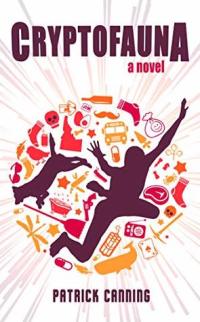 While lots of great science fiction takes lots of effort to tell stories that take a magnifying glass to the worse parts of humanity, sometimes it’s just really nice to take a break from that and luxuriate in a really fun science fiction story. After all, who doesn’t love a good semi-comedic, super entertaining sci-fi romp? The correct answer is: no-one. All of the other reviews suggesting this book is a hybrid of The Hitchhiker’s Guide to the Galaxy and Alice’s Adventures in Wonderland are right on the money. Patrick Canning’s Cryptofauna proves to be a book that’s every bit as interesting as its cryptic title – and the cryptic game of the same name played by the novel’s characters. (Thanks to the author for providing a copy of the book in exchange for a fair review.)
  Over the past ten years, Team Starkid has produced twelve full-length musicals (including their newest, Black Friday), eventually going on to post those shows on their YouTube page and making good, original theatre far more accessible than most theatre-lovers are used to. It’s been a delight to see how Starkid has grown from a group of plucky college kids making silly Harry Potter musical parodies into a full-fledged company that’s gone on multiple nationwide tours and written musicals that could legitimately give more “professional”/Broadway shows a run for their money. Like any group that’s been around for such a length of time, the quality of their work has ebbed and flowed; after all, not every show can be a masterpiece. But their most recent show, The Guy Who Didn’t Like Musicals, seemed to reignite a fire within the group and their fanbase, leading to unprecedented success in their Kickstarter campaign for their 10th anniversary season – a reunion concert featuring every Starkid performer willing to return and a brand new musical, Black Friday. With Black Friday having opened last week and the digital ticket being released earlier this week, it seemed like an apt opportunity to take a look at Starkid’s newest musical and see just what’s happening in Hatchetfield this time around. The biggest question: how is the show? In short, it’s really good. In fact, it might be one of my favorite shows from Starkid.
 To say the first Zombieland film was a pretty solid horror-comedy feels like an understatement, but that’s what it was. At the time of its release, it felt groundbreaking as hell. Sure, it wasn’t the first comedic horror film (or even the first comedic zombie film), but it was one of the first films of its ilk to be as scary as it was funny. Audiences hadn’t really seen such a well-executed horror/meta-comedy since the days of the first Scream film and it hit pop culture with a splash before fading into obscurity. A sequel has long been requested, with the writers and director all saying they were working on one but didn’t want to make it until they felt they’d cracked the story. Well, it’s a full ten years after the release of the first film, and I guess they’ve cracked the story as Zombieland: Double Tap releases in theaters today. The two questions on everyone’s mind are: “is it good?” and “how does it compare to the first film?” Unfortunately, the answers to those questions aren’t too positive. (This review will be as spoiler-free as possible, but any elements that have been shown in trailers may be discussed.)
 I am on the record, repeatedly, as being a huge fan of NBC’s The Good Place. It’s not only my favorite comedy currently airing on TV but one of my favorite TV shows in general. While I felt that the middle of season three was a bit of a misstep, the show had fully pulled me back into the fold by the end of that season. So, with the news that this fourth season of The Good Place will also be its final one, these first few episodes of the show had a lot to prove. They needed to continue to be stellar episodes of television while also laying the groundwork for what will ultimately become the show’s endgame. Do they pull this off? Absolutely. (NOTE: This review will contain spoilers for the first two episodes of the season, A Girl From Arizona, Parts 1 and 2, but will remain as spoiler-free as possible for the unaired episodes that NBC has granted critics access to – episodes 3 and 4: Chillaxing and Tinker, Tailor, Demon, Spy.)
 As if enough things haven’t been written about this movie, here comes another one. Ever since the announcement of this movie, I’ve been skeptical. The Joker is a character who has, historically, never had a definitive origin story – nor has he ever needed one. The entire point (and fun) of the character is that he has no origin. Various stories have hinted at one (The Killing Joke, The Dark Knight) but all have shied away from suggesting any of those origins is the definitive one. So, this movie being entirely about how the Joker became the Joker worried me a bit, though that worry was squashed a bit when they made it clear this movie wouldn’t tie into the larger DCEU and would be the cinematic equivalent of one of DC’s Elseworlds stories. With that context, it was a bit easier to get on board with a film like this. Then came all of the controversy surrounding the film – the articles about how it was irresponsible, the security concerns, etc – and the whole thing began to get a little messy. It was difficult to know what the film was actually saying versus what people were accusing the film of saying. The big question, now that opening weekend has come and gone without much incident, is whether Joker is a good movie that gets across all that it is trying to say. The answer? Yes, mostly. (NOTE: This review will contain some light spoilers for the movie, but this is one of those films where you pretty much already know how it ends; it’s not filled with surprises, but the enjoyment comes from the journey it takes you on.)
 We all know how much I love a good Neil Gaiman story. He’s one of my favorite authors currently writing and I’ve yet to encounter one of his stories that I haven’t enjoyed in some way or another. Some of my favorite Gaiman things are the comic adaptations of his prose work. I always find it really intriguing seeing how comic artists adapt the work of Gaiman (an author who got, perhaps, one of his earliest and biggest breaks within the world of comics) into this more visual medium. This is where Snow, Glass, Apples comes into play. It’s the latest in a fairly-lengthy line of comic adaptations of Gaiman’s work to be published by Dark Horse Comics; ignoring their ongoing American Gods adaptation, it’s the second such graphic novel adapting some of Gaiman’s short stories. What intrigued me the most about this adaptation were the excerpts that featured some of Collen Doran’s illustrations. Her style promised a really interesting, unique, and gorgeous take on the original short story and I was very excited to give it a read. How did it turn out? Just as good as I’d hoped it would be, if not better!
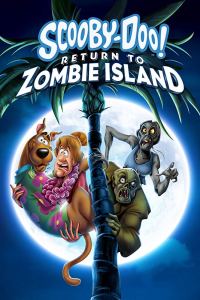 Scooby-Doo holds a special place in my heart. I was of the generation that primarily grew up on the direct-to-video Scooby-Doo movies instead of any long-running show. As such, some of my earliest exposures to the Scooby-Doo universe were films like Scooby-Doo on Zombie Island, Scooby-Doo and the Witch’s Ghost, and Scooby-Doo and the Cyber Chase. With that in mind, the idea of a sequel to Zombie Island – my favorite of the animated Scooby-Doo films of the 1990s and 2000s – was both an appealing one and one that caused some trepidation. Zombie Island was one of the rare Scooby-Doo movies where the monsters turned out to actually be real and some of the more recent Scooby-Doo entries have placed an increased focus on ensuring that people don’t think the monsters are real. On the other hand, the trailer looked kind of fun and it could very easily be a very enjoyable experience to return to this movie I loved as a kid. So, I tried to go into this movie with an open mind; I didn’t expect anything as wonderful as the original Zombie Island, but I was hoping for something that was still enjoyable. In the end, Return to Zombie Island isn’t a very good sequel to Zombie Island but it is a pretty solid Scooby-Doo movie – at least for the first half. (Spoilers ahead!)
 Thoroughly Modern Reviewer