
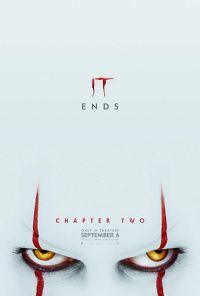
 It is a really tricky beast to adapt. It’s a massive novel that constantly jumps between time periods in such a way that to adapt it exactly as written would prove impossible for any kind of Hollywood film as it would require such an extensive runtime – or such an outrageous amount of cuts to the source material – that it just wouldn’t work. So, on the surface, it might seem like a really good idea to separate the two timelines in the novel into two movies – the first exploring the Losers Club’s childhood battle with Pennywise (Bill Skarsgård) while the second movie deals with their second battle with him, as adults. The 1990 miniseries mostly took this approach – though certain elements of the adult storyline were mixed with that of the children storyline, the two were mostly kept separate. The 2017 remake of It took it a step farther by presenting audiences with a film that focused entirely on the younger incarnation of these characters. With the wild success of that first movie, its inevitable sequel, It Chapter Two, was left to adapt the adult storyline and wrap the whole story up. Does it accomplish this and is it as good as the first film was? Yes and no. This movie isn’t a great horror film, nor is it a particularly good sequel – but it is a solid and deeply enjoyable movie. (Mild spoilers for It Chapter Two and all other versions of the story follow.)
It Chapter Two (Written by Gary Dauberman, directed by Andy Muschietti)
Evil resurfaces in Derry as director Andy Muschietti reunites the Losers Club in a return to where it all began with “IT Chapter Two,” the conclusion to the highest-grossing horror film of all time. Twenty-seven years after the Losers Club defeated Pennywise, he has returned to terrorize the town of Derry once more. Now adults, the Losers have long since gone their separate ways. However, kids are disappearing again, so Mike, the only one of the group to remain in their hometown, calls the others home. Damaged by the experiences of their past, they must each conquer their deepest fears to destroy Pennywise once and for all…putting them directly in the path of the clown that has become deadlier than ever.
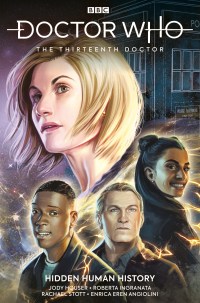 With Jodie Whittaker’s second season as the 13th Doctor delayed until 2020, fans of Doctor Who are left to turn to other mediums to get their fix of new Doctor Who stories. Thankfully, Titan Comics continues to put out new 13th Doctor comics each and every month. And they’re really good, too, with each arc comprising a single storyline that feels like a complete episode of the series!
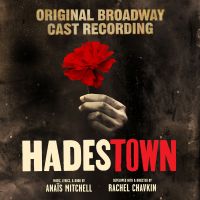 I say this every time I review any kind of music on this blog but it often bears repeating: I normally don’t review music. I don’t really feel all that qualified to talk about music as the only real knowledge I have of how it’s made comes from a 100-level college Music Appreciation course. So, because of that, I review music infrequently – and I review cast recordings eve less often as they usually comprise roughly 50% of the show and are an unfair representation of the entire quality of any musical. That being said, let’s talk about the Original Broadway Cast Recording for Hadestown – the winner of the 2019 Tony Award for Best New Musical. The Hadestown cast recording is unusual when compared to other cast recordings as it contains the entirety of the show’s score (most cast recordings leave out some reprises – or, even, entire songs). In that light, I think it’s worth looking at the album as a concept record and examine how it tells the story it’s trying to tell and how the music works to do this. (Spoiler alert: I really love this album a lot.)
 At San Diego Comic-Con this past weekend, Disney/Marvel announced the slate of titles making up Phase Four of the MCU. Among the titles announced are five films – Black Widow, Eternals, Shang-Chi and the Ten Rings, Doctor Strange in the Multiverse of Madness, and Thor: Love and Thunder – and five Disney+ shows – Falcon and the Winter Soldier, WandaVision, Loki, What If?, and Hawkeye. Some of these movies/shows seem interesting, others I don’t know enough about yet; but, overall, I found it rather hard to get excited for any of them as it all just sort of feels like an endless onslaught of similar-looking and feeling blockbusters that slowly erode any innovation within the artform. I wasn’t the only person with a take like this and, as you’d expect, there were some MCU-fans pretty unhappy with those who were less-than-enthusiastic about the news. One such fan replied to a pretty popular (progressive) YouTuber’s tweet, suggesting that the mixed reaction was partially in response to the Phase Four lineup consisting of films that focused on women/people of color/LGBTQ+ characters more than previous MCU films have. This accusation leveled at this particular YouTuber was a bit ludicrous as this YouTuber has long championed diversity in films, but it did lead to a conversation about how viewing Disney films has turned into a bit of a moral stance, often pushed by Disney’s own PR team. The idea goes that by watching one of Disney’s films featuring progressive ideas (such as having a diverse cast), you’re taking a moral stance in support of an issue rather than just giving your money to a corporation that doesn’t really care about these issues you care about. It’s an interesting conversation, and a kind of funny one, especially in light of Disney’s long history of immorality. (A quick note – I am not trying to insult or criticize anyone who is excited about any of Disney’s upcoming films, nor am I trying to insult or criticize anyone who really enjoys these movies. What I am trying to criticize is Disney’s framing of the viewing of their films as a moral statement while they do very immoral things as a company.)
 In news that will surprise exactly nobody: I didn’t like this remake of The Lion King. I historically haven’t liked any of the recent Disney “live-action” remakes, but I dislike this one for reasons that are different to why I didn’t like the others. But first, it’s important to note that I was never on the hype train for the original version of The Lion King. Sure, it’s a wonderfully enjoyable movie with a killer soundtrack, but it wasn’t notably better than any of the other films from that era of the Disney Rennaissance. It had all the usual problems found in those movies: odd pacing, a saggy middle, and supporting characters and villains that ended up far more interesting than the main character. But it was still very well done, featured some stellar animation, and was full of heart. All of what made the original Lion King a classic is gone in this photo-realistic CGI remake (I refuse to call it a live-action remake because none of this movie was filmed live; it was all done in a computer so it’s every bit as animated as the original version was, just with a different form of animation). Instead, we’re left with some pretty impressive looking CGI animals that are devoid of any life or heart and a movie that hews so closely to the original that it begs the question: why bother making this at all?
 I never read Neil Gaiman’s original 4-issue run of Books of Magic, nor did I read any of the subsequent runs, so, naturally, of the four titles initially announced for the first wave of Sandman Universe series, this one was the one I was least interested in. It’s not that I wasn’t interested in the premise – I love a good story about people learning how to do magic – but it was more the idea that, due to my lack of knowledge of any of the previous stories, I’d be totally lost going into this comic and find myself unable to enjoy it for what it is. Thankfully, that’s not what happened. Unfortunately, it is still my least favorite ‘volume 1’ of the three in the Sandman Universe that I’ve read so far. (Mild spoilers follow!)
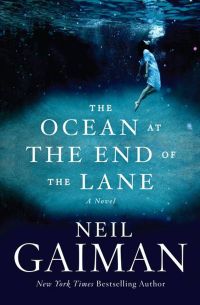 I first read The Ocean at the End of the Lane around the time it was originally published in 2013. It was the first novel from Neil Gaiman I’d ever read; I’d seen his Doctor Who work, watched Neverwhere, and read some issues of The Sandman by this point but I had never read one of his novels in their entirety. Talk about a hell of a way to get into Gaiman’s work. At the time, I was just approaching adulthood, so this novel’s tale of a middle-aged man going through a deeply nostalgic trip down memory lane really hit me hard as it evoked feelings of long-lost childhood and the story itself proved to be far scarier than anything I’d read from Gaiman before – or, frankly, since. Now, since a stage adaptation of the novel has recently been announced by the National Theatre in the UK (it hits the stage in December of this year and I desperately hope National Theatre Live broadcasts it), it felt like the perfect time to revisit this book. It’s been six years since I last read it and I reread books so infrequently that it’ll almost be like experiencing this story for the first time all over again. And how is it returning to this story, you might ask? Wonderful. I truly adore this novel. (NOTE: this review may feature spoilers related to the plot of the story.)
 I tried to read Neverwhere, the first solo novel from Neil Gaiman, years ago but I had shortly beforehand watched the original TV version of the story, so I had a lot of trouble getting into the novel as it skewed so closely to what I’d so recently watched. Years passed and I’d read a number of Gaiman’s other novels – Stardust, American Gods, Anansi Boys, The Ocean at the End of the Lane, and more – while never returning to his first to really give it a fair shot. Now, in the wake of the success of Gaiman’s adaptation of his and Terry Pratchett’s Good Omens, I thought I’d return to a few favorites of Gaiman’s work while finally giving Neverwhere a real chance. Enough time has passed that I don’t really remember a whole lot of the TV show, so it was really the perfect time to give the book I read. I went to my local bookstore and found a new version of the book – Gaiman’s preferred text, now illustrated by Chris Riddell, one of Gaiman’s frequent collaborators. With this new copy of the book and a copy of the audiobook – narrated by Gaiman, himself – it was time to finally read Neverwhere. Now, having finished the book, I can honestly say that I’m really mad at myself for how long it took me to read this book because it’s really that damn good. (NOTE: This review will discuss elements of the story itself, Riddell’s illustrations, and Gaiman’s audiobook. Also, mild spoilers for a 23-year-old novel follow.)
  I was late hopping onto the Stranger Things train. I tried watching the first season back when it was initially released in 2016 but I just couldn’t get into it. It featured all the things that so many Spielberg movies (many of which the series is clearly trying to emulate) have that annoy me – too much focus on the adolescent drama and not enough focus on the actual spooky stuff. So, I never got into it. Fast forward to December 2018, when I finally sit down to watch through the first two seasons of the show. I still stand by a lot of my initial thoughts, but it’s hard not to get into the show. It fetishizes the 1980s to the point where it almost feels masturbatory, never having anything interesting to say about its time period and merely mining the era for as many nostalgic references it cram into the show as humanly possible; it never explores its mythology with any of the depth you’d want it to; and it often gets too caught up in the kids’ needless drama and odd side stories, but it’s a mostly fun show. The two novels and comic series that have been released in the downtime between season two and season three have gotten me far more interested in the universe of the story than the show ever did, so, naturally, I’m interested in seeing what season three does with the storyline. Will it finally explore some of the more interesting elements of its mythology or will it just be more of the same frustrating balance the first two seasons had? Spoiler alert: it’s the latter. Season 3 of Stranger Things is more of the same stuff we’ve already seen and not much new. (Mild spoilers ahead!)
 Thoroughly Modern Reviewer