
 In news that should surprise absolutely no one, Mystery Science Theater 3000 makes for a really funny, really enjoyable, and really good comic. I reviewed the first issue back when it came out and found it to be a pretty enjoyable read. Now, I’ve finished the final issue of the run and I can confirm that it remains an enjoyable read throughout its run, intertwining the signature MST3K humor with the world of public domain comics.
Mystery Science Theater 3000: The Comic by Joel Hodgson, Harold Bucholz, Matt McGinnis, Seth Robinson, Sharyl Volpe, and Mary Robinson; illustrated by Todd Nauck, Jack Pollock, Mike Manley, and Mimi Simon
The riffing hilarity of the Mystery Science Theater 3000 comes to comics when Kinga Forrester pairs her Kingachrome Liquid Medium with her latest invention–the Bubbulat-R! Jonah Heston, Crow T. Robot, and Tom Servo find themselves thrust into the 2-D world of public domain comics, with riffing as their only defense!
From its humble beginnings on a tiny mid-west TV station in 1988, through its years as a mainstay on The Comedy Channel/Comedy Central and the SciFi Channel all through the ’90s, to its spectacular resurrection on Netflix in 2017, Mystery Science Theater 3000 has had a transformative effect on television, comedy, and the way old, cheesy movies are viewed. Now creator Joel Hodgson has set his sights on the comics medium, and the four-color pamphlets will never be the same!
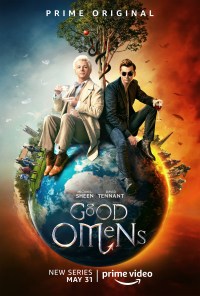 I love Neil Gaiman’s books. Obviously. I talk about them all the time. I write religiously about the American Gods TV series. One of the first Gaiman novels I ever read was his collaboration with Terry Pratchett (of Discworld fame), Good Omens: The Nice and Accurate Prophecies of Agnes Nutter, Witch. It was one of those books that felt akin to Douglas Adams’ novels and it was a book that I really loved. Naturally, I’d heard rumors of it being turned into a film for years, though nothing ever seemed to come of it until Amazon Prime and BBC announced they were co-producing a six-episode adaptation, written and executive produced by Gaiman, himself. I’m a big fan of authors getting to adapt their own stories for various mediums – though, often, many authors don’t do such a great job with those adaptations as they don’t understand the constraints of whichever medium the story is being adapted for. Gaiman, however, has plenty of experience writing for film, TV, comics, and prose, so if any author could successfully translate their novel into a visual medium, it would be Neil Gaiman. Thankfully, that’s exactly what he did with this adaptation, too. These six episodes of Good Omens are so delightfully accurate to the novel, so immensely entertaining, and so well put together that it is just so joyous to watch. This is one of those shows that I might revisit yearly just for the hell of it. (Mild spoilers for both the novel and the show ahead!)
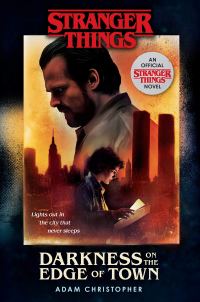 Stranger Things is returning to screens this summer for its third season and it seems that Netflix is pulling out all the stops to promote it. With multiple novels and comic mini-series, the Stranger Things universe just seems to be growing and growing. And, here’s the thing: these Stranger Things novels are really turning out to be pretty enjoyable reads. I loved the first one, Suspicious Minds (written by Gwenda Bond) and I quite enjoyed this second one, Darkness on the Edge of Town. It’s not quite as spectacular as the first one – and it doesn’t quite reveal anything as shocking or interesting as that book – but it ends up being a pretty solid crime novel with a Stranger Things twist. (Mild spoilers for the novel follow.)
 I love Aladdin. It’s probably my favorite of the “Disney Renaissance films” and so, naturally, I’d be pretty hesitant about any new adaptation of it. The Broadway version mostly ended up working out, though I haven’t actually managed to see it – just heard the soundtrack and seem some of the officially released footage. It seems fun enough, but, for obvious reasons, it could never match the sheer energy found within the original animated tale. The same, it turns out, rings true for this live-action remake of Aladdin. The energy of the original isn’t there, nor is the creativity – of the Broadway version or of the original version. It’s not a terrible movie, but it’s not a good one either. Mostly, it’s just a boring rehash of a beloved classic with a few new twists thrown in in a lame attempt to make it seem more distinct. (Some spoilers ahead!)
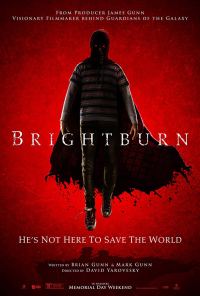 I tend to enjoy superhero movies that are a bit darker. I like to actually get inside a hero’s head, especially those whose chief motivation to be heroic is borne out of some kind of PTSD. It’s one of the main reasons I adore Batman as much as I do. And it’s why I love some of the darker DC movies – even if, objectively, they’re not exactly well-written movies (Batman v Superman, Watchmen, etc.). So, naturally, Brightburn should be right up my alley. It takes one of my least favorite superheroes – Superman, disliked by me due to his eternal blandness – and puts a similar character in a scenario where he becomes evil as he learns of his superpowers instead of becoming a good guy. Brightburn is not a Superman movie, but it’s clearly inspired by the Superman story (alien baby crashes to earth, is adopted by parents who live on a farm, discovers his powers as he hits puberty, etc). Unfortunately, Brightburn is every bit as bland as most Superman stories are. (Spoilers ahead!)
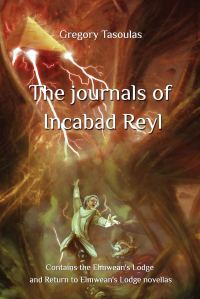 I’m really picky about the kinds of science fiction and fantasy books I like. I like stories that have a well-defined world while also not requiring an encyclopedia to understand that world. I like stories with well-defined characters who help guide the reader through this other world. So, when Gregory Tasoulas reached out to offer a review copy of his book The Journals of Incabad Reyl for me to review, I thought I’d give it a shot. It seemed right up my alley and, on the whole, I’m not disappointed. It’s not really the kind of sci-fi/fantasy story I’d read, but it did end up being pretty good.
 In case it isn’t clear, I love Welcome to Night Vale. I love the novels, I love the live shows, I love the podcast, and I love these script books, too. I always have trouble focusing on audio-only stories, so I find that having the scripts for podcasts such as Welcome to Night Vale really helps me follow the podcast and understand all that is going on within it. Add to these extremely useful scripts a bunch of illustrations and a whole lot of behind the scenes tidbits, and you’ve got a collection of published scripts that any Night Vale fan would love. This proved true for the first two volumes of script books and it absolutely proves true for this new set, too. A note: I have previously reviewed years
 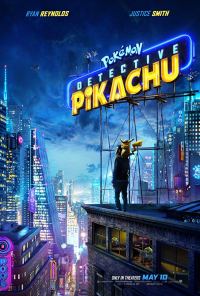 I’ll be totally honest – when I first heard that Warner Bros was making a live-action Pokémon movie based on some game that featured a talking Pikachu that moonlit as a detective, I was pretty skeptical. The subsequent announcement that Ryan Reynolds would be voicing the titular Detective Pikachu did intrigue me a bit, at least, but I still wasn’t sure such a thing could work. Then the first trailer hit and the CGI actually looked really good and the tone seemed to be a softer version of Reynolds’ Deadpool humor, so I was a lot closer to being sold on the idea. Having now seen the film, I can safely say that it’s exactly what you think a film with a talking Pikachu moonlighting as a detective and voiced by Ryan Reynolds would be: devilishly funny. But it’s also a pretty solid mystery and a really fun movie. (Mild spoilers follow)
 One of the most appealing parts of Neil Gaiman’s Sandman series was that it was one of those rare long-running comic books that had a definitive end. It ran for a total of 75 issues and, for a while, that was it. Over the years, Gaiman had returned a few times to the universe in order to pen a short spin-off here or a short prequel comic there, but there had never really been anything major that expanded on the world of The Sandman – aside from Mike Carey’s equally long-running Lucifer series, spun off from the character’s few appearances in the main Sandman run. So, when it was announced that Gaiman would be teaming up with Vertigo to launch The Sandman Universe, a collection of four series inspired by and expanding upon the original Sandman run, I was a bit skeptical. Of the four titles that were revealed, there were two that interested me the most: Simon Spurrier’s The Dreaming and Dan Watters’ Lucifer. As The Dreaming was the first of the four books to launch, it’ll be the first of the four that I’ll cover here. In volume one of The Dreaming, Spurrier takes us back into the realm of the Dreaming where Daniel, the current Lord of Dreams, has disappeared just as things are going wrong. And it only gets crazier from there.
 Movies that dramatize the events of real crimes are always forced to walk a narrow tight-rope. They have to be careful not to gratuitously show too much of the real violence and potentially glorify real murders while also not focusing too much on the wrong aspects and showing too little of the crimes and accidentally make the real murderer too sympathetic/unfrightening. It’s a tight-rope that Netflix’s newest film, Extremely Wicked, Shocking Evil and Vile, is forced to walk – and it doesn’t do a great job. It’s admirable at how little Ted Bundy’s (Zac Efron) real violence is shown, but it also does a poor job at really showing how terrible he was, instead choosing to ostensibly focus on his relationship with Liz Kendall (Lily Collins). However, it doesn’t do a particularly good job at establishing their relationship and actually developing either of them as characters within the narrative of a film. Instead of feeling like an actual movie, Extremely Wicked, Shockingly Evil and Vile feels more like a Wikipedia article covering Bundy’s crimes and his various relationships. (Spoilers for the film follow!)
 Thoroughly Modern Reviewer