
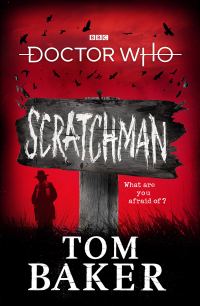
 Doctor Who: Scratchman is a story that’s been gestating for a long time. Beginning life as an idea for a film by the Fourth Doctor, Tom Baker, himself, Scratchman never resulted in an actual film, and the idea gathered a lot of dust as Baker moved onto other things. Until now, that is. Aided by prolific Doctor Who novelist, James Goss, Tom Baker returned to his Scratchman idea and turned it into the newest Doctor Who novel from BBC Books. So, is the novel worth the long wait? More or less, yeah.
In his first-ever Doctor Who novel, Tom Baker’s incredible imagination is given free rein. A story so epic it was originally intended for the big screen, Scratchman is a gripping, white-knuckle thriller almost forty years in the making.
The Doctor, Harry and Sarah Jane Smith arrive at a remote Scottish island, when their holiday is cut short by the appearance of strange creatures – hideous scarecrows, who are preying on the local population. The islanders are living in fear, and the Doctor vows to save them all. But it doesn’t go to plan – the time travelers have fallen into a trap, and Scratchman is coming for them.
With the fate of the universe hanging in the balance, the Doctor must battle an ancient force from another dimension, one who claims to be the Devil. Scratchman wants to know what the Doctor is most afraid of. And the Doctor’s worst nightmares are coming out to play…
 Over the years, River Song (Alex Kingston) has had adventures with every (living) Doctor from the classic run of Doctor Who and those adventures have been a whole lot of fun. With that in mind, it was only a matter of time until she started meeting some of the Doctor’s biggest enemies. And now, she meets, perhaps, the Doctor’s greatest enemy. And several incarnations of them, to boot. Namely, Missy (Michelle Gomez), the Burnt Master (Geoffrey Beevers), the War Master (Derek Jacobi), and the Master from the TV movie (Eric Roberts). With this lineup of actors and characters, you’d expect quite the exciting set of adventures and I’m happy to report that this box set is every bit as good as you’d hope it would be.
 We’re living in a golden age of the Live TV musical. Every year since 2013, we’ve gotten a new live broadcast of a famous musical. There are usually star-studded, filled to the brim with well-known actors from the stage and screen, and no expense is spared when it comes to the set and costumes. Why, then, are these productions usually met with reactions that range from indifference to hatred? Do we live in a society that finds itself too cynical to enjoy a good old musical? I don’t think so. I think the problem lies less with the audience and more with the creative team and the producers of these productions. In general, each of these productions has had at least one of four problems that result in their less-than-stellar reception: the choice of musical was questionable, the cast wasn’t great, the live audience (or lack thereof), or the camerawork. The teams behind each of these productions had their hearts in the right place, but nearly all of them fell into one of those traps, resulting in audience derision.
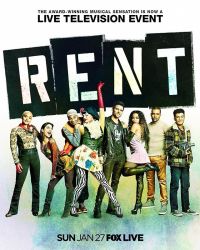 Rent. It’s a musical that many people have heard of. It’s a musical that many either passionately love or passionately hate. It’s a musical that had a monumental impact on the Broadway musical. It’s also the newest musical to be adapted for TV as a live broadcast. And, I’ll be honest, when I heard that Fox was gonna do Rent as their next live musical, I didn’t think it was a great idea. Rent isn’t exactly network-TV friendly; it’s filled with lots of explicit language and adult themes and stuff you can’t do or say or network TV, so I assumed it would likely be censored to hell and back in order to make it comply with the standards and practices of Fox. With all that being said, how’d the producers and cast of Rent: Live do? Well, it’s a mixed bag.
 The Good Place is one of my favorite shows currently airing on TV. There’s nothing as funny, heartwarming, and genuinely well-written and well-made as this show. Unfortunately, every show is subject to a rough patch or two, and much of the first half of season 3 of The Good Place could be considered this show’s rough patch. At first, putting all the humans – Eleanor (Kristen Bell), Chidi (William Jackson Harper), Tahani (Jameela Jamil), and Jason (Manny Jacinto) – back on Earth in an attempt to see if they can improve their lives seemed like a good idea. But, it quickly turned out that without that element of fantasy the show’s afterlife setting gave it, it all felt a bit less special. Thankfully, about midway through the season, the writers started reintroducing some of those fantastical elements before eventually killing the humans again and returning the show to the afterlife. And that’s when things got really good. When we last left off, Janet (D’Arcy Carden) had taken all the humans and Michael (Ted Danson) into her void while she and Michael went to the Accountant’s office to investigate the points. There, they found out that nobody had made it into The Good Place in over 500 years, and quickly Michael and the gang end up traveling through a mail chute into the mailroom of the Good Place. And things only get crazier and more satisfying from there. (SPOILERS AHEAD)
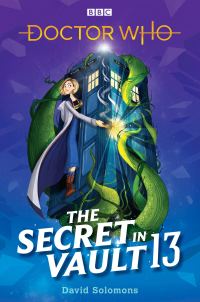 I am beginning to notice a trend with these books featuring the Thirteenth Doctor: I am liking them more than I liked a lot of the episodes in her first season. Perhaps it’s the fact that the novels have a bit more time to fully tell the stories they are wanting to tell. Perhaps it’s because these writers have an amazing grasp on these characters and the kinds of Doctor Who stories that work well in prose-form. Whatever the case, The Secret in Vault 13 is another excellent Doctor Who novel.
 H.G. Wells’ The War of the Worlds has always been a better premise than it has been a story. The premise is just so interesting and malleable that it can be adapted and readapted into any number of different permutations. It’s this ability, more than the content of the actual story, that has allowed the novel to stand the test of time. Most of the well-known adaptations of the novel bear strikingly little in common with it – Orson Welles’ radio drama moves the action to America in the 1930s, and the two major film versions do the same thing, just in different time periods. One of the most well-known adaptations – that also skews pretty closely to the content of the original novel – was Jeff Wayne’s musical adaptation of the story. First released as a concept album in the 1970s, his adaptation has seen massive popularity in multiple worldwide tours. On the fortieth anniversary of the original release of that adaptation, Audible has released a new adaptation of Jeff Wayne’s musical – an audio drama featuring music from the musical and a new script. Is it as good as the musical? Well, I’m not sure I’d quite go that far, but it is pretty darn enjoyable.
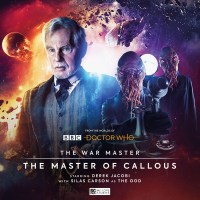 The War Master: The Master of Callous is one of my least favorite box sets from Big Finish Productions. It’s a shame, too, as I really love Derek Jacobi as the Master and I enjoy stories that focus on the Master doing dastardly things. I enjoyed the first War Master box set, Only the Good, quite a bit, mostly because it felt like the writers had something to say about the War Master and had something for him to do. That box set went a long way towards tying the Master from the classic series (and Eighth Doctor audios) and the Master from the revived TV series together. This box set, on the other hand, features none of that interesting writing. Here, it doesn’t feel like the writers had anything new to say about the character, nor did it feel as though the character actually had anything to do. In fact, he’s barely in two of the four stories! Needless to say, I’m not a fan of this box set. (NOTE: There will be spoilers ahead.)
 All good things must come to an end. The same remains true for unfortunate things, too. Even A Series of Unfortunate Events must come to an end. With season 3, that’s exactly what the Netflix adaptation on the Lemony Snicket series does. The books are pretty notorious for their lack of any kind of real resolution or concrete answers to the mysteries presented throughout the series. So, with that in mind, how does the show handle the ending? The answer: much the same, but a bit different. Featuring a bit more resolution than what was found in the books, season 3 of A Series of Unfortunate Events brings the somewhat uneven series to a satisfying conclusion.
 Thoroughly Modern Reviewer