
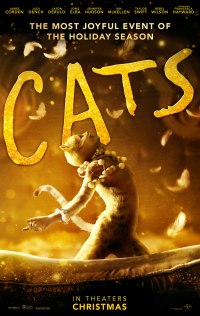
 All of us saw the trailer for this movie, and I’m pretty sure all of us felt the same wave of confusion and borderline-revulsion. Even if you were familiar with the hit Broadway musical that inspired this film, there was something about how uncanny the CGI looked that bordered on the horrifying instead of the cute. Not exactly the best start, yeah? Going into CATS, most of the audience probably expected a train wreck. I certainly did. That being said, whoever cut together the trailers for the film should not edit trailers for a living as the trailers were an awful representation of the movie. At the end of the day, CATS is neither as consistently weird throughout as you want it to be, nor is it as good as the film seems to think it is. There are plenty of weird moments, too, but once you get used to the CGI, it’s basically exactly the stage musical as you remember it. Is it fun? Yeah, most of the time. Is it worth seeing? Sure, at least once. But your overall enjoyment will depend almost entirely on how much you like the musical. I liked the movie a bit more than I liked the musical (for reasons that will become apparent) – but I also really don’t like the musical. (Very mild spoilers ahead.)
CATS (written by Lee Hall & Tom Hooper, directed by Tom Hooper)
Featuring Andrew Lloyd Webber’s iconic music and a world-class cast of dancers under the guidance of Tony-winning choreographer Andy Blankenbuehler (Hamilton, In the Heights), the film reimagines the musical for a new generation with spectacular production design, state-of-the-art technology, and dance styles ranging from classical ballet to contemporary, hip-hop to jazz, street dance to tap.A tribe of cats called the Jellicles must decide yearly which one will ascend to the Heaviside Layer and come back to a new Jellicle life.
 To say the first Zombieland film was a pretty solid horror-comedy feels like an understatement, but that’s what it was. At the time of its release, it felt groundbreaking as hell. Sure, it wasn’t the first comedic horror film (or even the first comedic zombie film), but it was one of the first films of its ilk to be as scary as it was funny. Audiences hadn’t really seen such a well-executed horror/meta-comedy since the days of the first Scream film and it hit pop culture with a splash before fading into obscurity. A sequel has long been requested, with the writers and director all saying they were working on one but didn’t want to make it until they felt they’d cracked the story. Well, it’s a full ten years after the release of the first film, and I guess they’ve cracked the story as Zombieland: Double Tap releases in theaters today. The two questions on everyone’s mind are: “is it good?” and “how does it compare to the first film?” Unfortunately, the answers to those questions aren’t too positive. (This review will be as spoiler-free as possible, but any elements that have been shown in trailers may be discussed.)
 As if enough things haven’t been written about this movie, here comes another one. Ever since the announcement of this movie, I’ve been skeptical. The Joker is a character who has, historically, never had a definitive origin story – nor has he ever needed one. The entire point (and fun) of the character is that he has no origin. Various stories have hinted at one (The Killing Joke, The Dark Knight) but all have shied away from suggesting any of those origins is the definitive one. So, this movie being entirely about how the Joker became the Joker worried me a bit, though that worry was squashed a bit when they made it clear this movie wouldn’t tie into the larger DCEU and would be the cinematic equivalent of one of DC’s Elseworlds stories. With that context, it was a bit easier to get on board with a film like this. Then came all of the controversy surrounding the film – the articles about how it was irresponsible, the security concerns, etc – and the whole thing began to get a little messy. It was difficult to know what the film was actually saying versus what people were accusing the film of saying. The big question, now that opening weekend has come and gone without much incident, is whether Joker is a good movie that gets across all that it is trying to say. The answer? Yes, mostly. (NOTE: This review will contain some light spoilers for the movie, but this is one of those films where you pretty much already know how it ends; it’s not filled with surprises, but the enjoyment comes from the journey it takes you on.)
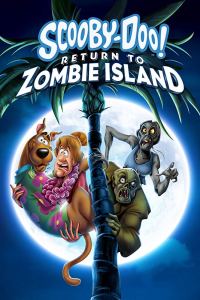 Scooby-Doo holds a special place in my heart. I was of the generation that primarily grew up on the direct-to-video Scooby-Doo movies instead of any long-running show. As such, some of my earliest exposures to the Scooby-Doo universe were films like Scooby-Doo on Zombie Island, Scooby-Doo and the Witch’s Ghost, and Scooby-Doo and the Cyber Chase. With that in mind, the idea of a sequel to Zombie Island – my favorite of the animated Scooby-Doo films of the 1990s and 2000s – was both an appealing one and one that caused some trepidation. Zombie Island was one of the rare Scooby-Doo movies where the monsters turned out to actually be real and some of the more recent Scooby-Doo entries have placed an increased focus on ensuring that people don’t think the monsters are real. On the other hand, the trailer looked kind of fun and it could very easily be a very enjoyable experience to return to this movie I loved as a kid. So, I tried to go into this movie with an open mind; I didn’t expect anything as wonderful as the original Zombie Island, but I was hoping for something that was still enjoyable. In the end, Return to Zombie Island isn’t a very good sequel to Zombie Island but it is a pretty solid Scooby-Doo movie – at least for the first half. (Spoilers ahead!)
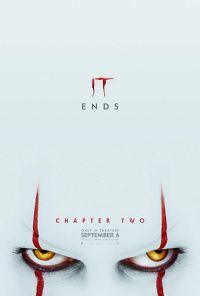 It is a really tricky beast to adapt. It’s a massive novel that constantly jumps between time periods in such a way that to adapt it exactly as written would prove impossible for any kind of Hollywood film as it would require such an extensive runtime – or such an outrageous amount of cuts to the source material – that it just wouldn’t work. So, on the surface, it might seem like a really good idea to separate the two timelines in the novel into two movies – the first exploring the Losers Club’s childhood battle with Pennywise (Bill Skarsgård) while the second movie deals with their second battle with him, as adults. The 1990 miniseries mostly took this approach – though certain elements of the adult storyline were mixed with that of the children storyline, the two were mostly kept separate. The 2017 remake of It took it a step farther by presenting audiences with a film that focused entirely on the younger incarnation of these characters. With the wild success of that first movie, its inevitable sequel, It Chapter Two, was left to adapt the adult storyline and wrap the whole story up. Does it accomplish this and is it as good as the first film was? Yes and no. This movie isn’t a great horror film, nor is it a particularly good sequel – but it is a solid and deeply enjoyable movie. (Mild spoilers for It Chapter Two and all other versions of the story follow.)
  At San Diego Comic-Con this past weekend, Disney/Marvel announced the slate of titles making up Phase Four of the MCU. Among the titles announced are five films – Black Widow, Eternals, Shang-Chi and the Ten Rings, Doctor Strange in the Multiverse of Madness, and Thor: Love and Thunder – and five Disney+ shows – Falcon and the Winter Soldier, WandaVision, Loki, What If?, and Hawkeye. Some of these movies/shows seem interesting, others I don’t know enough about yet; but, overall, I found it rather hard to get excited for any of them as it all just sort of feels like an endless onslaught of similar-looking and feeling blockbusters that slowly erode any innovation within the artform. I wasn’t the only person with a take like this and, as you’d expect, there were some MCU-fans pretty unhappy with those who were less-than-enthusiastic about the news. One such fan replied to a pretty popular (progressive) YouTuber’s tweet, suggesting that the mixed reaction was partially in response to the Phase Four lineup consisting of films that focused on women/people of color/LGBTQ+ characters more than previous MCU films have. This accusation leveled at this particular YouTuber was a bit ludicrous as this YouTuber has long championed diversity in films, but it did lead to a conversation about how viewing Disney films has turned into a bit of a moral stance, often pushed by Disney’s own PR team. The idea goes that by watching one of Disney’s films featuring progressive ideas (such as having a diverse cast), you’re taking a moral stance in support of an issue rather than just giving your money to a corporation that doesn’t really care about these issues you care about. It’s an interesting conversation, and a kind of funny one, especially in light of Disney’s long history of immorality. (A quick note – I am not trying to insult or criticize anyone who is excited about any of Disney’s upcoming films, nor am I trying to insult or criticize anyone who really enjoys these movies. What I am trying to criticize is Disney’s framing of the viewing of their films as a moral statement while they do very immoral things as a company.)
 In news that will surprise exactly nobody: I didn’t like this remake of The Lion King. I historically haven’t liked any of the recent Disney “live-action” remakes, but I dislike this one for reasons that are different to why I didn’t like the others. But first, it’s important to note that I was never on the hype train for the original version of The Lion King. Sure, it’s a wonderfully enjoyable movie with a killer soundtrack, but it wasn’t notably better than any of the other films from that era of the Disney Rennaissance. It had all the usual problems found in those movies: odd pacing, a saggy middle, and supporting characters and villains that ended up far more interesting than the main character. But it was still very well done, featured some stellar animation, and was full of heart. All of what made the original Lion King a classic is gone in this photo-realistic CGI remake (I refuse to call it a live-action remake because none of this movie was filmed live; it was all done in a computer so it’s every bit as animated as the original version was, just with a different form of animation). Instead, we’re left with some pretty impressive looking CGI animals that are devoid of any life or heart and a movie that hews so closely to the original that it begs the question: why bother making this at all?
 Novelizations of movies can really be a hit or miss affair. The best ones take the events that happen within a film and expand upon them in ways only a novel can do – bringing readers into the thoughts of the characters within a film and showing those same events from a different angle or with extra bits that the film might not have had time to show. Unfortunately, most film novelizations don’t do that – they to just be fairly strict prose conversions of the script. So, it’s with that mindset that I approached this “novelization” of Guillermo del Toro’s award-winning Pan’s Labyrinth – I hesitate to call this book a novelization because Pan’s Labyrinth came out thirteen years ago and most novelizations come out around the same time as the film they’re novelizing. With that context, it might be best to consider this book a retelling of the story featuring in the film – a screen-to-page adaptation, if you will, by a talented author – Cornelia Funke. As is always the case with any adaptation, does the story still work when transferred to this new medium? In the case of Pan’s Labyrinth: The Labyrinth of the Faun, the answer is yes and no.
 The Chucky/Child’s Play franchise is a really interesting one. It started off with a pretty standard horror film about a creepy doll before it devolved into a series of sequels that grew more and more comedic, eventually coming back around to more serious horror once again with the latest few sequels. But with so many sequels, the continuity of the series has become a bit difficult to follow. So, perhaps it was about time for a reboot to happen. Could new life be breathed into this old franchise by some new creatives? Or would it just end up being another in a long list of subpar remakes of classic horror films? With this new Child’s Play, it’s a bit of both. (Mild spoilers follow!)
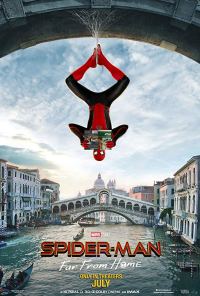 It’s not exactly a secret that I’m not the biggest fan of the MCU. It’s not that I have anything against the series as a whole, and I’ve quite liked a number of the movies, but a much larger number of them tend to be exceedingly mediocre movies. There’s nothing wrong with a movie that’s just “okay” – but when it’s film after film after film that all feel the same and don’t aspire to be much better than simply “fine”, it can get really exhausting very quickly. There’s really only one or two MCU movies that I thought were actually bad (Civil War and Endgame), but both of them were huge team-up movies. I tend to have nicer thoughts for the solo films. As for this iteration of Spider-Man, well… I didn’t love his appearance in Civil War and Homecoming‘s tone felt a bit too ’80s-teen-movie at times for my tastes, but he’s a solid character and Tom Holland is doing a very good job with his portrayal and the character has some of the best villains in the entire Marvel universe (and Homecoming’s usage of The Vulture was very good), so I have more positive thoughts about Spider-Man than I do for some other MCU movies. So, with the upcoming release of the newest Spider-Man movie, Far From Home, it’s time to see what’s next for Spider-Man in the aftermath of Avengers: Endgame. Is this movie better than Endgame was? Answer: Yes, but that’s not exactly a high hurdle to clear – and Far From Home barely clears it. (This review will be as spoiler-free as possible, but if you don’t want to know anything about the movie, this is your warning.)
 Thoroughly Modern Reviewer