

I’m always game to try an indie sci-fi book. Independently published books are always a bit of a gamble; sometimes they’re great; other times they’re not so great. But often you can find a great diamond in the rough by reading an independently published sci-fi novel. So, when the publishers of Auxiliary: London 2039 reached out to me and asked if I would like to review the book, I thought it was worth a read. It sounded reminiscent of Blade Runner and Altered Carbon, two stories I’ve enjoyed to a reasonable extent, so I thought it was worth a shot. And, having read the book, it’s not a bad read but it’s not a great read either. It’s perfectly fine, with a suitable mystery, well-written prose, and solid pacing, but it’s also not particularly original, and it feels like something you’ve read before. (3.5 out of 5 wands.)
(NOTE: A copy of the novel was provided by the publisher in exchange for a fair review. All thoughts are my own. Additionally, there may be spoilers ahead.)
Continue readingAuxiliary: London 2039 by Jon Richter
In a time where AI drives every car, cooks every meal, and plans every second of human life in London, a police detective named Carl Dremmler catches a murder suspect red-handed. The investigation seems open and shut, but the tech-wary detective can’t help but believe the accused’s bizarre story: that his robotic arm committed the grisly crime, not him. As Dremmler pursues the truth, he must question everyone he thinks he knows and face down every terror 2039 has to offer.


 I don’t normally review YA novels for the sheer fact that they so rarely appeal to me. I’m not a huge fan of a lot of the typical fare they cover (teenage drama, lots of romance, etc) so I tend to stay away from them. But I’ve read some of Daniel Kraus’ previous work, the most recent being his adaptation of The Shape of Water, and really enjoyed it. So, when I saw that he had a new book coming out and read the book’s synopsis, I was definitely intrigued. It sounded like the kind of thing that might be right up my alley (being an avid lover of Science Fiction and Horror), so it seemed like a fun book to look into. Having now finished it, I can say that it was a good decision on my part. It’s a really well-written story that does its damndest to defy the normal constraints of its genre. I really enjoyed it and I think it’ll be a good read for a number of different audiences – including, but not limited to, the YA crowd. (Mild spoilers may follow.)
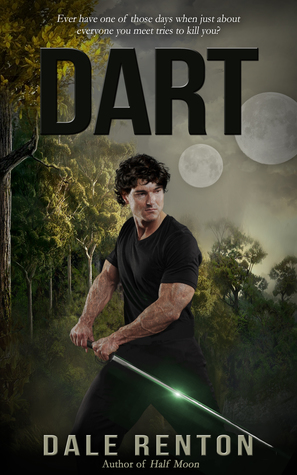 I will always enjoy a well-written sci-fi adventure. There is just something that will always be really enjoyable about that genre for me. Maybe it’s the mixture of the bigger thematic ideas often found in science fiction with some of the sillier elements of an adventure story, but there’s just something about sci-fi adventures that I really enjoy. Dale Renton’s Dart fits perfectly in with any number of sci-fi adventures. It’s exactly what you’d expect it to be stylistically while still packing in some surprises and a fair amount of enjoyment. It’s a well-written and enjoyable read. (Thanks to the author for providing me a copy of the book in exchange for an honest review.)
 While lots of great science fiction takes lots of effort to tell stories that take a magnifying glass to the worse parts of humanity, sometimes it’s just really nice to take a break from that and luxuriate in a really fun science fiction story. After all, who doesn’t love a good semi-comedic, super entertaining sci-fi romp? The correct answer is: no-one. All of the other reviews suggesting this book is a hybrid of The Hitchhiker’s Guide to the Galaxy and Alice’s Adventures in Wonderland are right on the money. Patrick Canning’s Cryptofauna proves to be a book that’s every bit as interesting as its cryptic title – and the cryptic game of the same name played by the novel’s characters. (Thanks to the author for providing a copy of the book in exchange for a fair review.)
  Thoroughly Modern Reviewer