
 We all know how much I love a good Neil Gaiman story. He’s one of my favorite authors currently writing and I’ve yet to encounter one of his stories that I haven’t enjoyed in some way or another. Some of my favorite Gaiman things are the comic adaptations of his prose work. I always find it really intriguing seeing how comic artists adapt the work of Gaiman (an author who got, perhaps, one of his earliest and biggest breaks within the world of comics) into this more visual medium. This is where Snow, Glass, Apples comes into play. It’s the latest in a fairly-lengthy line of comic adaptations of Gaiman’s work to be published by Dark Horse Comics; ignoring their ongoing American Gods adaptation, it’s the second such graphic novel adapting some of Gaiman’s short stories. What intrigued me the most about this adaptation were the excerpts that featured some of Collen Doran’s illustrations. Her style promised a really interesting, unique, and gorgeous take on the original short story and I was very excited to give it a read. How did it turn out? Just as good as I’d hoped it would be, if not better!
Snow, Glass, Apples (written by Neil Gaiman, illustrated by Colleen Doran)
A not-so-evil queen is terrified of her monstrous stepdaughter and determined to repel this creature and save her kingdom from a world where happy endings aren’t so happily ever after.From the Hugo, Bram Stoker, Locus, World Fantasy, Nebula award-winning, and New York Times bestselling writer Neil Gaiman (American Gods) comes this graphic novel adaptation by Colleen Doran (Troll Bridge)!
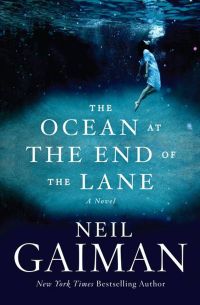 I first read The Ocean at the End of the Lane around the time it was originally published in 2013. It was the first novel from Neil Gaiman I’d ever read; I’d seen his Doctor Who work, watched Neverwhere, and read some issues of The Sandman by this point but I had never read one of his novels in their entirety. Talk about a hell of a way to get into Gaiman’s work. At the time, I was just approaching adulthood, so this novel’s tale of a middle-aged man going through a deeply nostalgic trip down memory lane really hit me hard as it evoked feelings of long-lost childhood and the story itself proved to be far scarier than anything I’d read from Gaiman before – or, frankly, since. Now, since a stage adaptation of the novel has recently been announced by the National Theatre in the UK (it hits the stage in December of this year and I desperately hope National Theatre Live broadcasts it), it felt like the perfect time to revisit this book. It’s been six years since I last read it and I reread books so infrequently that it’ll almost be like experiencing this story for the first time all over again. And how is it returning to this story, you might ask? Wonderful. I truly adore this novel. (NOTE: this review may feature spoilers related to the plot of the story.)
 I tried to read Neverwhere, the first solo novel from Neil Gaiman, years ago but I had shortly beforehand watched the original TV version of the story, so I had a lot of trouble getting into the novel as it skewed so closely to what I’d so recently watched. Years passed and I’d read a number of Gaiman’s other novels – Stardust, American Gods, Anansi Boys, The Ocean at the End of the Lane, and more – while never returning to his first to really give it a fair shot. Now, in the wake of the success of Gaiman’s adaptation of his and Terry Pratchett’s Good Omens, I thought I’d return to a few favorites of Gaiman’s work while finally giving Neverwhere a real chance. Enough time has passed that I don’t really remember a whole lot of the TV show, so it was really the perfect time to give the book I read. I went to my local bookstore and found a new version of the book – Gaiman’s preferred text, now illustrated by Chris Riddell, one of Gaiman’s frequent collaborators. With this new copy of the book and a copy of the audiobook – narrated by Gaiman, himself – it was time to finally read Neverwhere. Now, having finished the book, I can honestly say that I’m really mad at myself for how long it took me to read this book because it’s really that damn good. (NOTE: This review will discuss elements of the story itself, Riddell’s illustrations, and Gaiman’s audiobook. Also, mild spoilers for a 23-year-old novel follow.)
  Here’s the thing about the Men in Black movies: none of them are really that good. None of them are bad, either, but they’re nothing particularly special. They’ve always been harmless summer blockbusters that were more concerned with being a comedic, visual treat than telling a particularly compelling story. The first three films always succeeded based on the chemistry of their stars – Will Smith and Tommy Lee Jones. And that was okay. Men in Black never needed to be some pinnacle of storytelling; they were just these enjoyable action movies. All of that remains true for Men in Black: International, the latest sequel/reboot in the Men in Black franchise. The film features a pretty basic, predictable plot, some enjoyable jokes, some serviceable action, and largely succeeds based on the chemistry of its two stars – Chris Hemsworth and Tessa Thompson. (Mild spoilers ahead.)
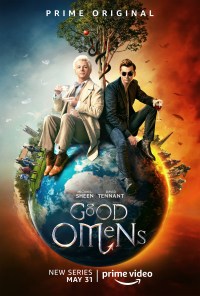 I love Neil Gaiman’s books. Obviously. I talk about them all the time. I write religiously about the American Gods TV series. One of the first Gaiman novels I ever read was his collaboration with Terry Pratchett (of Discworld fame), Good Omens: The Nice and Accurate Prophecies of Agnes Nutter, Witch. It was one of those books that felt akin to Douglas Adams’ novels and it was a book that I really loved. Naturally, I’d heard rumors of it being turned into a film for years, though nothing ever seemed to come of it until Amazon Prime and BBC announced they were co-producing a six-episode adaptation, written and executive produced by Gaiman, himself. I’m a big fan of authors getting to adapt their own stories for various mediums – though, often, many authors don’t do such a great job with those adaptations as they don’t understand the constraints of whichever medium the story is being adapted for. Gaiman, however, has plenty of experience writing for film, TV, comics, and prose, so if any author could successfully translate their novel into a visual medium, it would be Neil Gaiman. Thankfully, that’s exactly what he did with this adaptation, too. These six episodes of Good Omens are so delightfully accurate to the novel, so immensely entertaining, and so well put together that it is just so joyous to watch. This is one of those shows that I might revisit yearly just for the hell of it. (Mild spoilers for both the novel and the show ahead!)
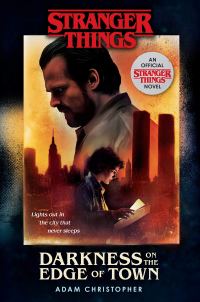 Stranger Things is returning to screens this summer for its third season and it seems that Netflix is pulling out all the stops to promote it. With multiple novels and comic mini-series, the Stranger Things universe just seems to be growing and growing. And, here’s the thing: these Stranger Things novels are really turning out to be pretty enjoyable reads. I loved the first one, Suspicious Minds (written by Gwenda Bond) and I quite enjoyed this second one, Darkness on the Edge of Town. It’s not quite as spectacular as the first one – and it doesn’t quite reveal anything as shocking or interesting as that book – but it ends up being a pretty solid crime novel with a Stranger Things twist. (Mild spoilers for the novel follow.)
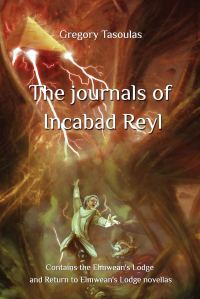 I’m really picky about the kinds of science fiction and fantasy books I like. I like stories that have a well-defined world while also not requiring an encyclopedia to understand that world. I like stories with well-defined characters who help guide the reader through this other world. So, when Gregory Tasoulas reached out to offer a review copy of his book The Journals of Incabad Reyl for me to review, I thought I’d give it a shot. It seemed right up my alley and, on the whole, I’m not disappointed. It’s not really the kind of sci-fi/fantasy story I’d read, but it did end up being pretty good.
 Season two of American Gods has had a pretty tough time getting to our screens. Originally renewed shortly after the first season began airing, season two suffered numerous production woes – first, the loss of its original two showrunners, Michael Green and Bryan Fuller; then the hiring and subsequent (reported) sacking of new showrunner Jesse Alexander; and, finally, countless delays to the show actually arriving on our screens. For a while, it seemed as though American Gods would never return to TV again or, if it did, it would return in a state that was dramatically less spectacular than its original season was. Well, thankfully, season two of American Gods officially premieres on STARZ this Sunday, March 10. STARZ has provided critics with the first two episodes of the season – and I have seen them – and I am happy to report that the show has, indeed, returned – and it’s returned without a significant drop in quality! (This review will be as spoiler-free as possible. Full, spoiler-filled reviews of each episode will be available on the Sundays that they air.)
 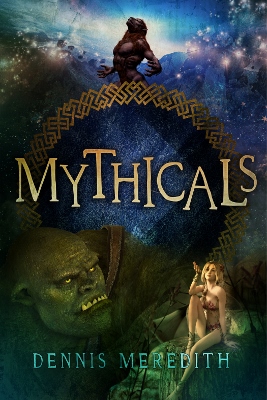 I love a good sci-fi book, that much is well known. But what about a sci-fi book that puts forth the idea that all the mythological creatures from Earth’s history (fairies, pixies, werewolves, vampires, etc) are actually alien species exiled to our planet as punishment for crimes made on their own planets? Well, a book like that would be right up my wheelhouse. That’s exactly the kind of book that Dennis Meredith’s Mythicals is. It’s also a very good one, too.
 Every new Doctor has to have a story set in the present day, a story set in the future/on an alien planet, and a story set in the past to start off their first season. We’ve had the present day story and we’ve had the futuristic/alien planet story, so it was time for our first trip into the past with this new TARDIS team. And where does the TARDIS end up taking our plucky heroes? None other than Montgomery Alabama, 1955. The day before Rosa Parks’ famous bus protest. Obviously, this is a rather touchy story for Doctor Who to try and tackle, so the biggest question is whether or not the show handled it well. In short: it absolutely did. (NOTE: There will be full spoilers ahead, so read with caution.)
 Thoroughly Modern Reviewer