
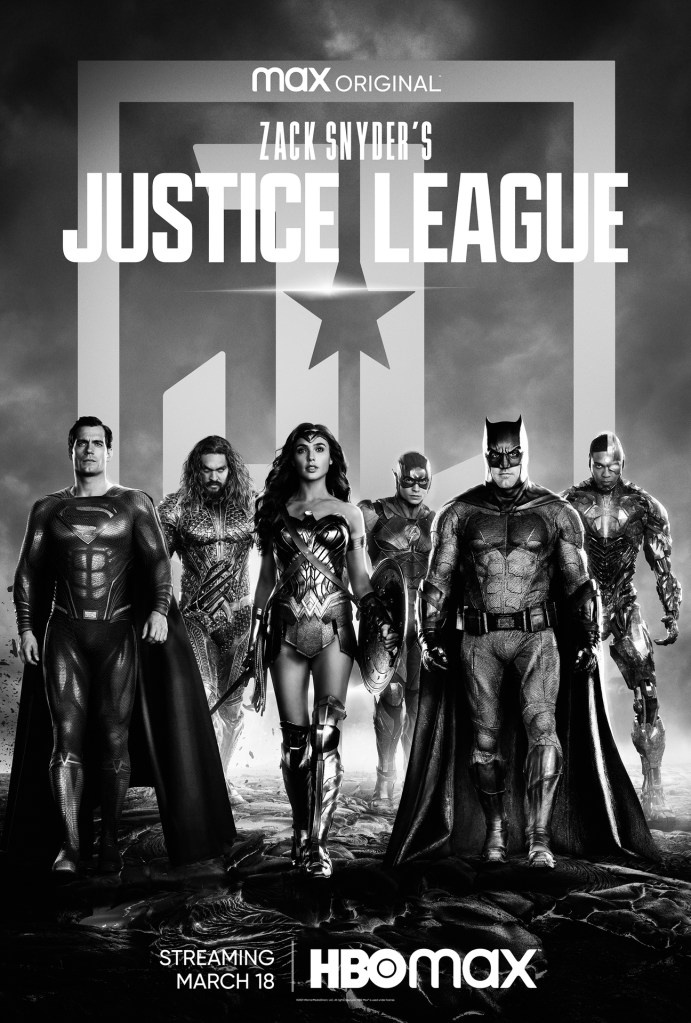
Three and a half years after the release of the maligned theatrical cut of Justice League, Zack Snyder’s original cut of the film is almost here. It’s been a long time coming but thanks to the support of many fans and the desperation of a streaming service in need of new content, the world can finally see Snyder’s full take on the Justice League. The biggest question on everyone’s minds is whether this new cut is better than the theatrical cut. The answer is both simple and complicated. In many, if not most, ways, Zack Snyder’s Justice League is miles better than the theatrical cut. However, even with all the extra content and context, this new cut provides, several of the theatrical cut’s problems remain. And they’re joined by some new problems exclusive to this version. It’s not a bad movie or anything—it often borders on being a good one. But it’s a too-long film that suffers from bad pacing, a lack of focus, and characters that still feel more like archetypes than three-dimensional people. Long story short, it’ll please those who adore Snyder’s movies, annoy those who hate them, and leave the rest of us in a middle ground of partial pleasure and partial displeasure. (3.5 out of 5 wands.)
NOTE: This review will generally be spoiler free. There may be references to plot points that are shared between both cuts of the film, but most of the newer stuff will be hinted at instead of spoiled.
Continue readingZack Snyder’s Justice League
(written by Zack Snyder and Chris Terrio; directed by Zack Snyder)
Batman (Ben Affleck) and Wonder Woman (Gal Gadot) enlist a team capable of protecting the world from the impending threat of Steppenwolf (Ciarán Hinds) and his Parademon army, who are scouring the universe for three hidden Mother Boxes that would enable Steppenwolf to transcend worlds, lay waste to all enemies, and restore his good standing with his master, Darkseid (Ray Porter). Though most of Batman and Wonder Woman’s initial efforts are met with resistance, they ultimately recruit Aquaman (Jason Momoa), Cyborg (Ray Fisher), and The Flash (Ezra Miller). But in order to help preserve the future of mankind, first they must each overcome their own demons.After Steppenwolf secures two of the boxes buried deep within Themyscira and Atlantis, the superheroes are forced to take advantage of Cyborg’s unique connection to the one remaining. Harnessing the box’s capabilities to resurrect a final team member (Henry Cavill), they inadvertently provide Steppenwolf with an opportunity to obtain it – setting him up for imminent domination. With DeSaad and Darkseid waiting in the wings and posing catastrophic threats of their own, can this unique band of heroes dismantle the Mother Boxes before Steppenwolf’s synchronization is complete?


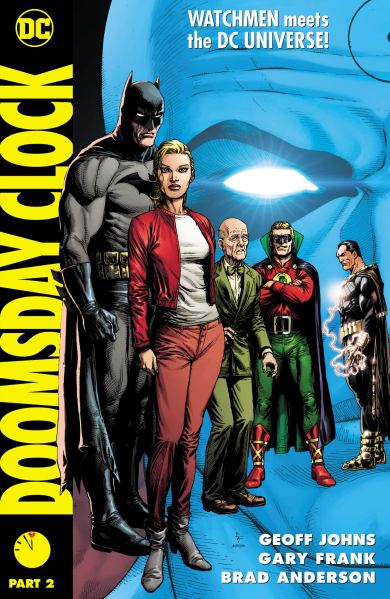 I really wish Doomsday Clock was better than it is. I love Alan Moore and Dave Gibbons’ Watchmen and I really enjoy the DC Universe; I even thought much of the lead up to this series was very good – or, at least, intriguing. But then the actual series came out and it was plagued by so many delays in its publication that it genuinely became difficult to follow the story as it went on. Unfortunately, rereading the whole series upon its completion didn’t really make it much easier to follow. But, I suppose, that’s in line with the original Watchmen graphic novel. (This review covers all twelve issues of Doomsday Clock and may contain mild spoilers.)
 Birds of Prey is one of those comic properties that know very little about. While I’ve always been more of a DC fan, and Batman has always been my favorite of the DC heroes, I’ve rarely ventured too far outside of his main title. Of course, I’ve seen some of his various animated films and shows, so I’m familiar with characters like Harley Quinn and Renee Montoya, but I’ve never been introduced to Huntress or Black Canary. So, going into this movie I wasn’t really sure what to expect. The DCEU has a historically uneven track record, with only Wonder Woman and Shazam being particularly good and this film is technically a sequel to the atrocious 2016 Suicide Squad film, so there was certainly no guarantee of quality here. Couple that with the slightly-unusual way the film was promoted and it became quite hard to predict just what kind of film Birds of Prey would be. Luckily, the film is an utter delight from start to finish and ranks among the best entries of the DCEU to date. (Mild spoilers follow!)
 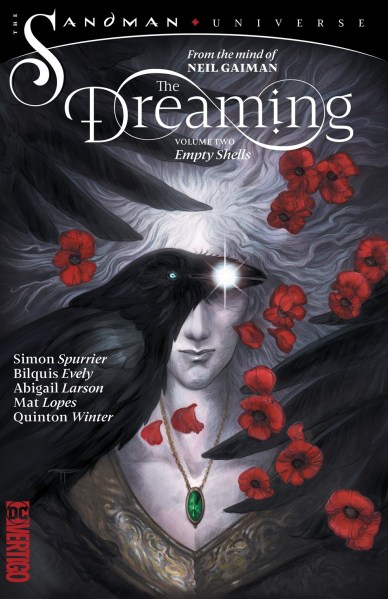 As I said in my review of the first volume of this new run of The Dreaming, one of my favorite things about Neil Gaiman’s original Sandman run was the way the comic’s story was partially about the very nature of stories. Gaiman played with various structures to examine the fabric of storytelling and why it’s always been such an effective means of communication. Everything else was the icing on this theme of a cake. This examination of storytelling is one of the key things that brings readers back to those comics time and time again. Simon Spurrier continued this approach in the first volume of his run on The Dreaming, and he continues it in this next volume – a volume that helps bridge the story of The Sandman with this new story being told here. It’s a really good graphic novel.
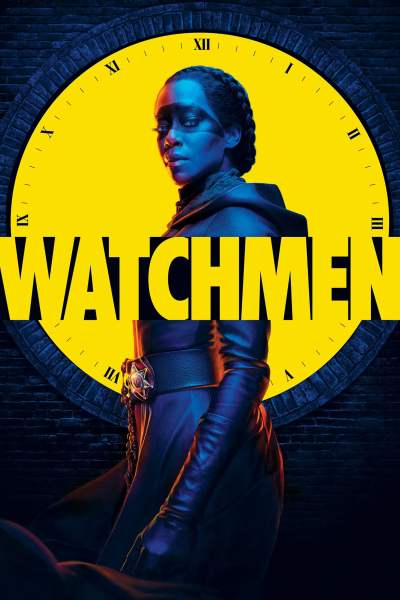 Watchmen is one of those properties that has proven notoriously difficult to adapt to other mediums, so it only seems fitting that it would similarly be difficult to review. Normally, I either review a TV show episode-by-episode, or I review it in chunks, or I review it after the finale ends. For Watchmen, the trick was deciding whether I’d review it three episodes at a time or whether I’d wait until the end of the season and just review the whole thing. As the third episode aired, it became clear that it was going to be impossible to judge this show until the ending was known. Like the graphic novel (written by Alan Moore and illustrated by Dave Gibbons), every episode/chapter of the story was clearly building to a climax that would either answer (most of) the questions posed by the story or would completely drop the ball, and the quality of the story would largely be determined by how well it executed its ending (even if individual “chapters” were excellent – episode 6 of the show and the chapter of the comic detailing Manhattan’s past). And, let’s be clear, every episode of the series was extremely good. There was a point to every episode, and they followed a very similar pattern to that of the comic (one episode would be devoted to furthering the plot along, the next would be devoted to exploring one of the key characters’ backgrounds (thus moving the emotional arcs forward) and they’d alternate back and forth like this until the climax. But with this style, it is very important that the landing pay off all of this development in a meaningful and satisfying way. Luckily, that’s exactly what the show managed to do. (Spoilers for all nine episodes of Watchmen follow. You have been warned.)
 Thoroughly Modern Reviewer