

Danger Days: The True Lives of the Fabulous Killjoys is my favorite My Chemical Romance album. It’s this wonderful explosion of sound, color, and joy. All of the promotion that surrounded it built up this wildly creative world that was delightful to spend time in. I loved the original True Lives of the Fabulous Killjoys comic, too—the one that came out a few years after the album and concluded the story that began in the music videos. Yes, it was a bit abstract, and the ending didn’t make a whole lot of sense. But I loved it anyway. I say all of this because I wish I liked The True Lives of the Fabulous Killjoys: National Anthem more than I did. It’s a great premise, with some delightfully gritty and horrific artwork. But the story is just… disappointing. (3 out of 5 wands.)
(NOTE: I received an ARC of this book from Edelweiss and Dark Horse. All thoughts are my own.)
Continue readingThe True Lives of the Fabulous Killjoys: National Anthem
Written by Gerard Way and Shaun Simon
Art by: Leonardo Romero
Colors by: Jordie Bellaire
The Fabulous Killjoys, once a group of teenage exterminators determined to save reality, have lost their way—and their memories. After a period of mental confinement, former Killjoys leader Mike Milligram gets de-programmed and hits the road to bring the gang back together for a final showdown against an evil pharmaceutical corporation, their monstrous hitman, and savage gang rivals.


 As evidenced by my weekly coverage of the American Gods TV series when it airs, I adore the book, originally written by Neil Gaiman. It’s one of those books that’s super weird and truly hard to explain and honestly just needs to be experienced. But, sometimes it can be hard to find a swatch of time with reach to read a 600+ page novel. Which is where visual adaptations come in. Obviously, they can, and should, never be replacements for reading the original text, but they can often be a great way of experiencing a story you might otherwise not have the time to experience. Unfortunately, Starz’s television adaptation continues to both stray from the source material and be plagued by behind-the-scenes troubles. Luckily, Dark Horse Comics’ has an adaptation of their own. Helmed by P. Craig Russell, these three volumes have been a very faithful adaptation of the novel and an utter joy to read as they’ve released. Now, with the publication of the third and final volume of the adaptation, it’s nice to have a fully-completed, semi-visual adaptation of the novel – if you consider a graphic novel to be a visual adaptation; I do. (Mild spoilers for both the original novel and the graphic novel.)
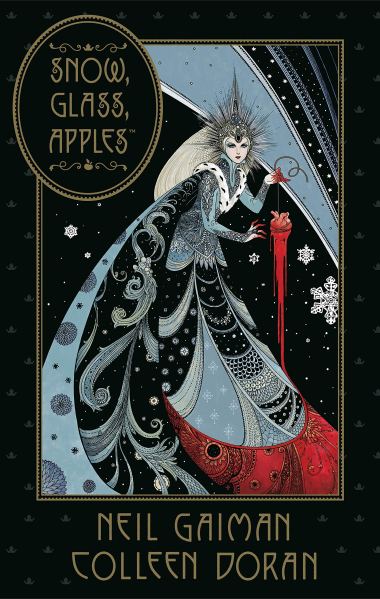 We all know how much I love a good Neil Gaiman story. He’s one of my favorite authors currently writing and I’ve yet to encounter one of his stories that I haven’t enjoyed in some way or another. Some of my favorite Gaiman things are the comic adaptations of his prose work. I always find it really intriguing seeing how comic artists adapt the work of Gaiman (an author who got, perhaps, one of his earliest and biggest breaks within the world of comics) into this more visual medium. This is where Snow, Glass, Apples comes into play. It’s the latest in a fairly-lengthy line of comic adaptations of Gaiman’s work to be published by Dark Horse Comics; ignoring their ongoing American Gods adaptation, it’s the second such graphic novel adapting some of Gaiman’s short stories. What intrigued me the most about this adaptation were the excerpts that featured some of Collen Doran’s illustrations. Her style promised a really interesting, unique, and gorgeous take on the original short story and I was very excited to give it a read. How did it turn out? Just as good as I’d hoped it would be, if not better!
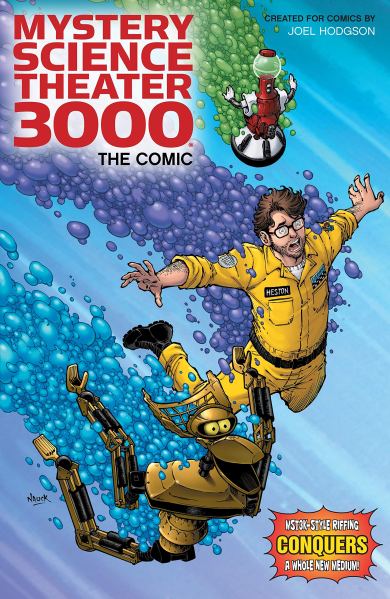 In news that should surprise absolutely no one, Mystery Science Theater 3000 makes for a really funny, really enjoyable, and really good comic.
  Stranger Things is massively successful. It’s probably Netflix’s biggest hit in the past five years, or so. So, it was only a matter of time before it started branching out into other mediums. Earlier last month, the first official novel – Gwenda Bond’s Suspicious Minds (
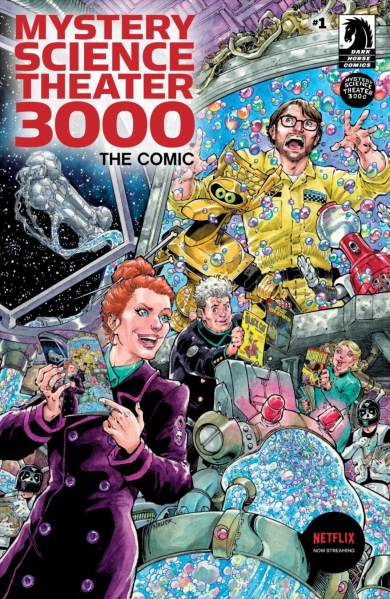 In news that should surprise absolutely no one, Mystery Science Theater 3000 makes for a really funny, really enjoyable, and really good comic. Written by a team of writers that includes series creator Joel Hodgson, Mystery Science Theater 3000: The Comic features Jonah Heston, Crow T. Robot, and Tom Servo being forced into the pages of public domain comics by Kinga Forrester and her lackey, Max. To survive these trips into those comics, Jonah and the ‘bots must riff their way through them.
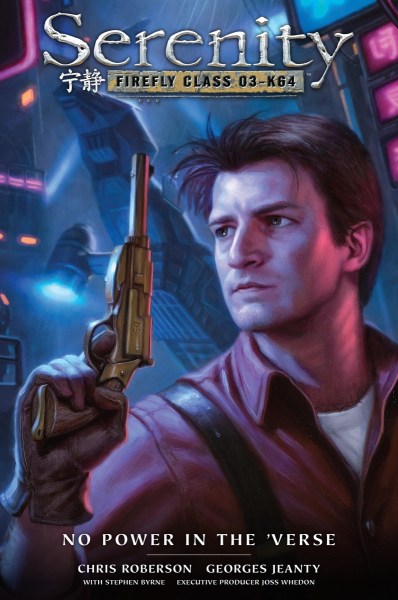 I’m so glad that Dark Horse comics is still continuing to tell Firefly stories. It will forever remain a shame that the show was canceled after one season and the movie, Serenity, didn’t do well enough to warrant any sequels, but at least we can continue to follow the adventures of the crew of the Serenity in comic form. In No Power in the ‘Verse, written by Chris Roberson and illustrated by Georges Jeanty, tough times haven’t ended for Mal Reynolds and his crew aboard the Serenity. When a call for help to find a missing friend takes them to an Alliance post on the Outer Rim, they encounter a new force building strength to fight the battle of the Browncoats–soon leading the crewmembers to question their individual values . . . Discovering that their friend is in Alliance custody and that an Alliance Operative is on the way, Mal concentrates his energy on the problem at hand and strikes an uneasy partnership for a daring rescue. But this is only the beginning of the story. Success will be when the Serenity’s crew makes it off this planet alive and all accounted for . . .
  Thoroughly Modern Reviewer