I haven’t regularly watched SVU since Christopher Meloni’s Detective Stabler left the show, so I was pretty excited to see his long-awaited return in this two-part crossover/pilot for the latest Law & Order spin-off. And, as expected, it’s a bit of a mixed bag. There’s a lot of stuff I liked and a lot of stuff I didn’t like. On the good side, it’s nice seeing Mariska Hargitay’s Olivia Benson reunited with Meloni’s Stabler. You can feel the years of chemistry they’ve got, mixed in with the years of tension caused by Stabler’s disappearance from her life. As a fan of those older episodes, there’s a certain nostalgic joy found in simply seeing the two of them interact with each other again. And I appreciated the way the show embraced the idea of Stabler’s sudden disappearance (he was unceremoniously written off the show between seasons when Meloni didn’t renew his contract) having weighed heavily on Benson. The scenes they shared, and the way the two episodes dig deep into that trauma, make the whole event worth watching.
I didn’t think I’d like this show. At all. The trailers made it look indistinguishable from the rest of the MCU’s normal fare. But, honestly, I’m surprised at how much I’m enjoying this show. It’s not as creative and risky as WandaVision, but The Falcon and The Winter Soldier is no less fun. If you told me to imagine a somewhat standard MCU story, I’d probably reply with something that sounded similar to this. To be fair, that’s not necessarily a bad thing. I’ve seen other reviewers describe Falcon and the Winter Soldier as reminiscent of the second Captain America film, and they’re right. This show is a character-driven political thriller. Its plot is kind of weak, but the character moments are fairly strong. This is the most character development Sam and Bucky have ever seen, and fans of them should be pretty pleased by how the characters are handled—Bucky in therapy was something I didn’t know I needed to see until I saw it. The way the show explores Bucky and Sam—their backstories, their trauma, and who they want to be—is a pretty compelling reason to watch the show, and the show mostly gets their characterizations right (though it stumbles a bit in the third episode).
One of the best things about the first season of Netflix’s adaptation of The Umbrella Academy was the way it developed Klaus. In the comics, he wasn’t depicted as much more than a troubled drug addict who could talk with the dead. But the show dove deep into his past, expanding upon the trauma he undergoes by exposing himself to these unrestful spirits, and giving him a heartbreaking love story and an unhealthy amount of Vietnam PTSD. The show turned a character who was merely quirky in the comics into a character that was multi-layered and deeply complex. So, in the wake of this, the announcement of a Klaus-centric prequel comic was exciting. What kind of a past would the character’s creator, Gerard Way, (and co-writer Shaun Simon) give him? How much would it differ from the show? What happened to eighteen-year-old Klaus after he was expelled from the Umbrella Academy? As it turns out, these aren’t really the questions at the front of the comic’s mind. While it does explore some of Klaus’s trauma and psyche, You Look Like Death is more of a fun romp with a fan-favorite character than an intimate character study. But honestly, it’s so much fun that that’s not much of a problem. (4.5 out of 5 wands.)
NOTE: I was provided an advance copy of this book from Edelweiss and Dark Horse Comics. This review may contain mild spoilers, but will mostly be spoiler free.
“Tales From the Umbrella Academy: You Look Like Death” Written by Gerard Way and Shaun Simon Art and Colors by I.N.J. Culbard When 18-year-old Klaus gets himself kicked out of the Umbrella Academy and his allowance discontinued, he heads to a place where his ghoulish talents will be appreciated—Hollywood. But after a magical high on a stash stolen from a vampire drug lord, Klaus needs help, and doesn’t have his siblings there to save him.
The third season of American Gods came to quite an explosive ending last week, with Shadow holding Wednesday’s vigil on the World Tree. It’s an ending that was well prepared for, concluding a season that spent ample time building up Shadow’s struggles with his divinity, his desire for power, and the cyclical nature of him trying to escape Wednesday’s shadow, only to be drawn further into it. On the whole, it was the most consistent season of American Gods to date. While it might not have reached the same heights of past seasons, it maintained a level of quality that ensured the show never reached the same lows of past seasons. Now, with the future of the show in flux, it seems like a good time to revisit the third season, looking at what worked and what didn’t.
NOTE: There will be full spoilers for all three seasons of American Gods. Read at your own risk.
Characters from Norse mythology remain a popular facet of modern pop culture. These days, most people are probably familiar with the Marvel comics/film versions of deities like Thor, Loki, and Odin, but elements of Norse mythology frequently pop up all over the place. Famously, Neil Gaiman borrowed heavily from Norse mythology for his 2001 novel, American Gods (which got adapted by Dark Horse Comics as a comic series in 2017, so it’s only appropriate that he published his own retellings of Norse tales in 2017’s Norse Mythology. And now, Dark Horse is bringing these closer-to-authentic Norse tales to the world of comics—where the Marvel versions of these characters got their start. The first volume of this series—adapted by P. Craig Russell and illustrated by Russell, Mike Mignola, Jerry Ordway, Piotr Kowalski, David Rubín, and Jill Thompson—is a very faithful adaptation of Gaiman’s source material. Like Dark Horse’s American Gods adaptation, very little is changed here—but it works very, very well. (4.5 out of 5 wands.)
NOTE: Thanks to Edelweiss and Dark Horse Comics for providing a digital ARC of this title. All thoughts are my own.
Norse Mythology: Volume 1 Adapted by: P. Craig Russell Illustrated by: P. Craig Russell, Mike Mignola, Jerry Ordway, Piotr Kowalski, David Rubín, and Jill Thompson Gaiman and Russell team with a legendary collection of artists to take readers through a series of Norse myths, including the creation of the Nine Worlds, the loss of Odin’s eye and source of his knowledge, the crafting of Thor’s hammer and the gods’ most valuable treasures, the origin of poetry, and Loki’s part in the end of all things—Ragnarök.
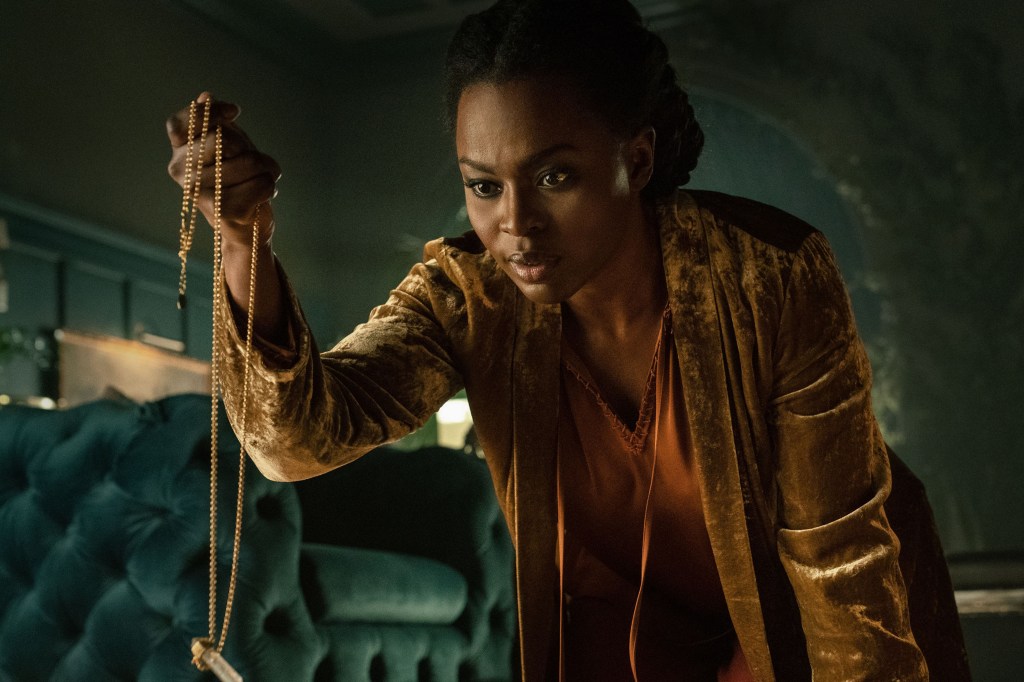
And with that, another season of American Gods comes to a close. Tonight’s episode caps off what’s been the most consistent season of American Gods so far—and what an episode it is. If last week’s episode felt more like a traditional season finale, then this week’s episode acts as a beautiful coda to the season, bringing many of the character arcs to a conclusion while throwing the narrative door wide open for the show to go in any number of directions. It raises more questions than it answers, but that doesn’t make it any less entertaining. It straddles a nice line between faithfulness to the book and faithfulness to what the TV adaptation has become and I feel it works very well—even if there are some developments I’m not entirely sold on just yet. (4.5 out of 5 wands.)
NOTE: This review features spoilers for episode 3×10 of American Gods. Read at your own risk.
American Gods: Episode 3×10: “Tears of the Wrath-Bearing Tree” Written by: Laura Pusey and Ryan Spencer Directed by: Russell Lee Fine Teetering on the edge of war and peace, the gods gather to mourn a loss. Bilquis’ divine journey brings her to an unexpected revelation, while Shadow finally embraces a destiny that could bring him either greatness or death.
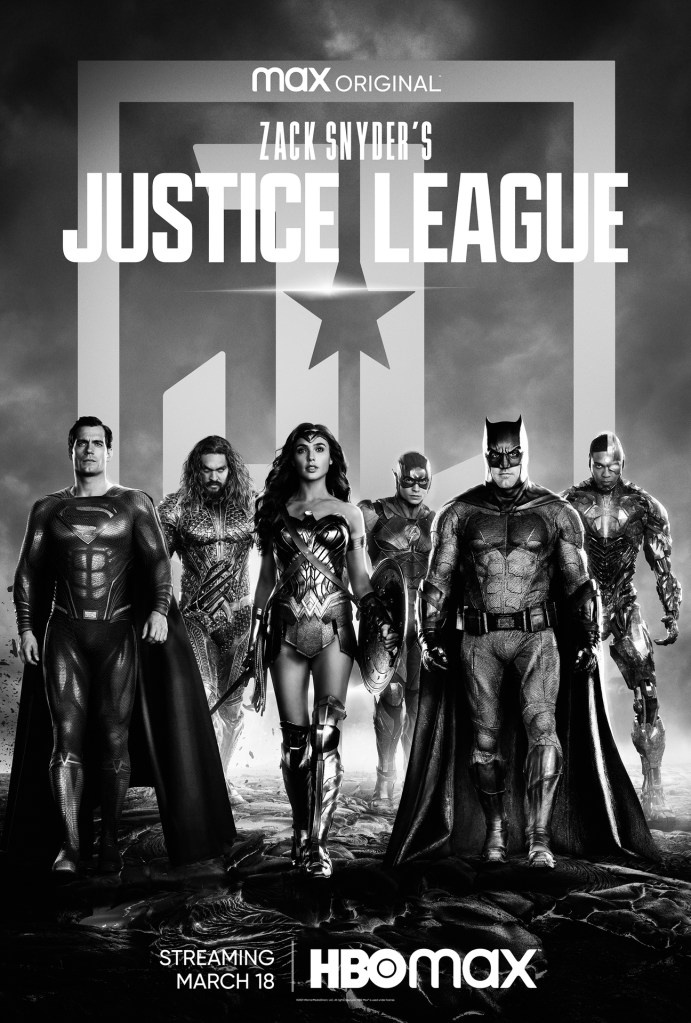
Three and a half years after the release of the maligned theatrical cut of Justice League, Zack Snyder’s original cut of the film is almost here. It’s been a long time coming but thanks to the support of many fans and the desperation of a streaming service in need of new content, the world can finally see Snyder’s full take on the Justice League. The biggest question on everyone’s minds is whether this new cut is better than the theatrical cut. The answer is both simple and complicated. In many, if not most, ways, Zack Snyder’s Justice League is miles better than the theatrical cut. However, even with all the extra content and context, this new cut provides, several of the theatrical cut’s problems remain. And they’re joined by some new problems exclusive to this version. It’s not a bad movie or anything—it often borders on being a good one. But it’s a too-long film that suffers from bad pacing, a lack of focus, and characters that still feel more like archetypes than three-dimensional people. Long story short, it’ll please those who adore Snyder’s movies, annoy those who hate them, and leave the rest of us in a middle ground of partial pleasure and partial displeasure. (3.5 out of 5 wands.)
NOTE: This review will generally be spoiler free. There may be references to plot points that are shared between both cuts of the film, but most of the newer stuff will be hinted at instead of spoiled.
Zack Snyder’s Justice League (written by Zack Snyder and Chris Terrio; directed by Zack Snyder) Batman (Ben Affleck) and Wonder Woman (Gal Gadot) enlist a team capable of protecting the world from the impending threat of Steppenwolf (Ciarán Hinds) and his Parademon army, who are scouring the universe for three hidden Mother Boxes that would enable Steppenwolf to transcend worlds, lay waste to all enemies, and restore his good standing with his master, Darkseid (Ray Porter). Though most of Batman and Wonder Woman’s initial efforts are met with resistance, they ultimately recruit Aquaman (Jason Momoa), Cyborg (Ray Fisher), and The Flash (Ezra Miller). But in order to help preserve the future of mankind, first they must each overcome their own demons.
After Steppenwolf secures two of the boxes buried deep within Themyscira and Atlantis, the superheroes are forced to take advantage of Cyborg’s unique connection to the one remaining. Harnessing the box’s capabilities to resurrect a final team member (Henry Cavill), they inadvertently provide Steppenwolf with an opportunity to obtain it – setting him up for imminent domination. With DeSaad and Darkseid waiting in the wings and posing catastrophic threats of their own, can this unique band of heroes dismantle the Mother Boxes before Steppenwolf’s synchronization is complete?
It’s been a few weeks since I’ve reviewed an American Gods episode—but that’s not because they’ve been bad. Episode seven felt the victim of quick edits (which were needed to remove Marilyn Manson from the episode) but largely served as setup (albeit good setup) for the rest of the season. Episode eight was extremely beautiful when it focused on Salim’s plotline, but then the stuff with Tyr, Wednesday, and Shadow felt a bit under-baked. The same remains true for this week’s episode. On the surface, it feels a lot like a season finale, wrapping up many of the season’s ongoing plotlines while setting up future ones. But it also reveals one of the season’s biggest problems: in its effort to juggle so many plotlines, it’s forgotten which ones are more important and needed more focus, resulting in a moment that should’ve been a big, explosive reveal landing with more of a thud. Still, most of the episode works very well. (4 out of 5 wands.)
NOTE: This review contains spoilers for episode 3×09. Read at your own risk.
American Gods 3×09: “The Lake Effect” Written by: Laura Pusey and Damian Kindler Directed by: Metin Hüseyin Shadow has to decide the price he’s willing to pay for his idyllic Lakeside life. As Laura and her new ally close in on her target, Wednesday has to persuade Czernobog that it’s time to make peace with their enemies.
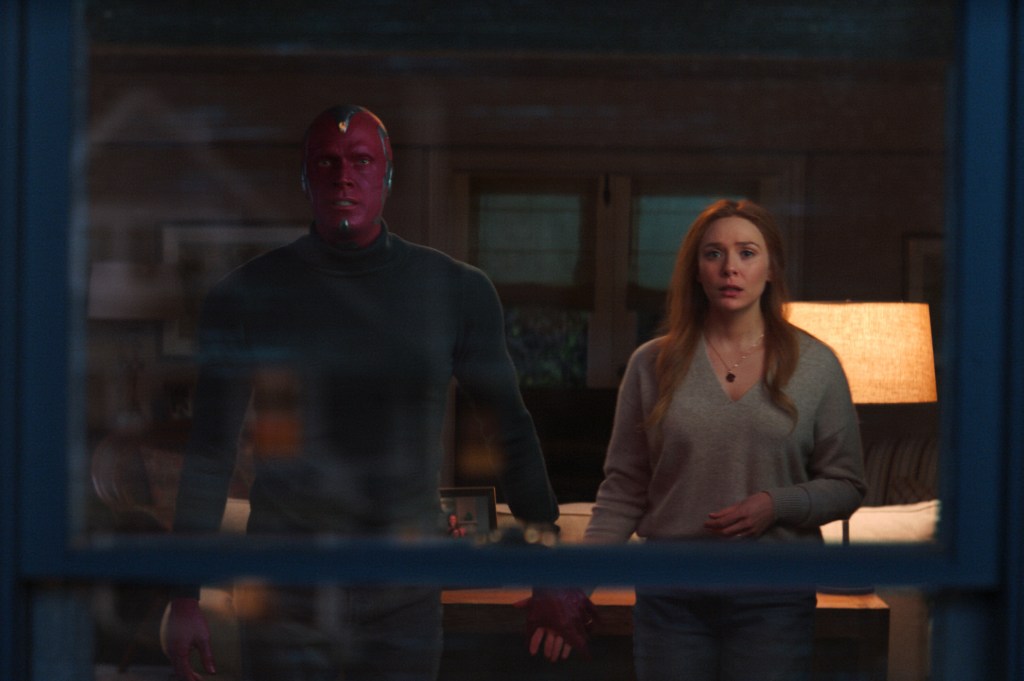
On the whole, I was pleasantly surprised by WandaVision. Of all the Disney+ MCU shows, WandaVision was the one that seemed most interesting. But I never expected to like it as much as I did. Was it perfect? No, but it took a lot longer for it to devolve into the more typical MCU fare than I’d expected. And, underneath all of that guff, was a compelling and moving story about grief—the kind of character-driven narrative that the MCU films aren’t equipped to deliver. For me, the character work balances out any problems I had with the show’s overarching narrative, but others seem to disagree quite heartily. The question of the week appears to be: was the WandaVision finale disappointing? For me, the answer is both yes and no. Allow me to explain.
NOTE: Full spoilers for the entirety of WandaVision’s first season.
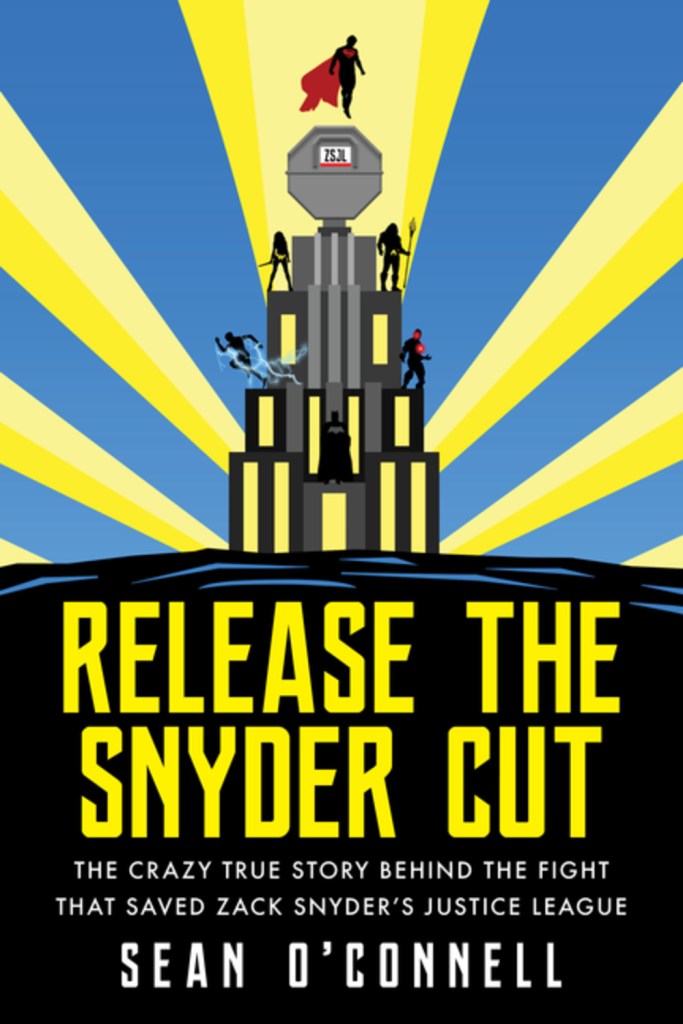
I’m a fan of creators having control over the things they create. Yes, to a degree, all art is a process of collaboration, whether it’s written or visual. But there’s nothing worse than seeing a creator either forced down an avenue they don’t want to explore or having their entire project taken out of their hands. The latter, it seems, is what happened with 2017’s Justice League movie. Full disclosure: I’m pretty neutral on Zack Snyder as a filmmaker—I’ve liked some of his films, and I’ve disliked some of his films. I’m also pretty neutral on the fandom that surrounds him—every fandom has positive and negative elements, and I think it’s disingenuous to paint any fandom based on its worst aspects. So, I don’t have any skin in the discourse that surrounds the Snyder Cut. What I do have, however, is an interest in the behind-the-scenes stories of films like Justice League. This interest is what brought me to Sean O’Connell’s Release the Snyder Cut. Going into it, I was hoping for a well-sourced examination into the making of the Justice League movie—what went wrong, how it went wrong, and how we got to a point where Snyder’s original cut could be made. Unfortunately, that’s not what the book is. Instead, O’Connell’s book reads as more of an extended blog post, briskly chronicling the history of the DCEU—from its earliest days with Man of Steel up until the disastrous theatrical release of Justice League and the subsequent fan-driven campaign to restore Snyder’s original cut. It’s fine, but there’s not much here that isn’t available elsewhere. (3 out of 5 wands.)
NOTE: I received an ARC of this book from Edelweiss. All thoughts are my own.
Release the Snyder Cut: The Crazy True Story Behind the Fight That Saved Zack Snyder’s Justice League by Sean O’Connell Release the Snyder Cut is an entertaining, investigative, and emotional recap of 2017’s failed Justice League movie, followed closely by a breakdown of the exhaustive efforts by a dedicated fan base to unearth director Zack Snyder’s unfinished version. We’re currently in the golden age of superhero blockbusters. Movies like Black Panther, Wonder Woman, Joker, and Avengers: Endgame routinely break box office records and compete for Oscars. Yet, Zack Snyder’s 2017 behemoth Justice League—a veritable sure bet at the Hollywood casino—tanked miserably, and the behind-the-scenes reasons for the movie’s demise are fascinating. The true story behind Justice League’s failure is only half of the juicy narrative, though. Snyder—who left the project months before filming concluded—still fans the flames that surround the rumor of a “Snyder Cut” of the film. This allegedly is the version of the story he wanted to tell before the studio, Warner Bros., pulled him off of the project. Hence, the “Snyder Cut.” Pop-culture fans love a meaty mystery, and the controversy swirling around the lost Snyder Cut of Justice League has been captivating comic-book movie fans for years. Additionally, an army of passionate DC and Snyder fans are committed to getting the “Cut” released. They already have gone to incredible lengths to fight for the movie’s opening, and have found strength, support, and charitable goals in their global “family” of Snyder Cut supporters. Their stories are remarkable, and the book is just as much about the dedicated fans who make up the Snyder Cut movement as it is about the unreleased film. Their efforts finally paid off with the recent announcement that Snyder’s cut will be released in 2021 by Warner Bros. and HBO Max. Release the Snyder Cut tells the entire story.



 Thoroughly Modern Reviewer